COSMIC ANCESTRY | Quick Guide | What'sNEW - Later - Earlier - Index | by Brig Klyce | All Rights Reserved | ||||
What'sNEW Archives, January-March 200431 March 2004
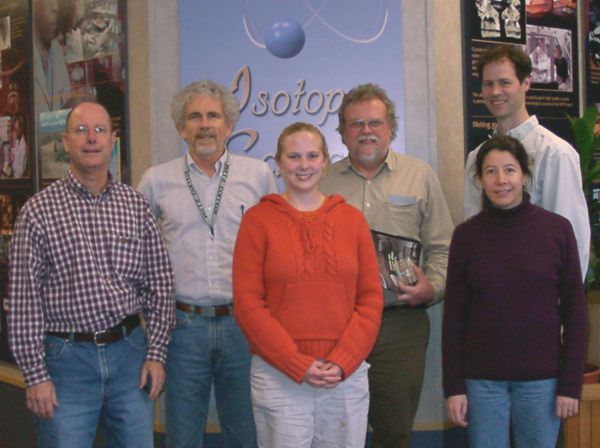
Isotope tests inconclusive. Tests seeking unearthly isotope ratios in bacteria from the stratosphere were attempted at Lawrence Livermore National Laboratory, California, 24-26 March. For technical reasons only one inorganic particle was fully tested (and isotope analysis of it is ongoing.)
Microbiologist Milton Wainwright of the University of Sheffield and I delivered the samples and identified the particles for testing. Physicist Ian Hutcheon directed the investigation at LLNL, with Peter Weber operating the NanoSIMS, and Julie Smith and Christie Ramon providing technical assistance. The Lawrence Livermore team was exceedingly helpful and patient; Milton and I, and the whole India-UK team are grateful to them. We hope they will be willing to look again, when we have new samples properly prepared for the NanoSIMS.
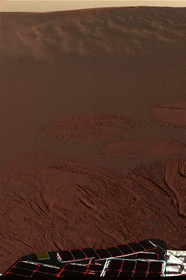
 Opportunity Rover Finds Strong Evidence Meridiani Planum Was Wet, release 2004-074, JPL, NASA, 2 Mar 2004. Meridiani Planum: "Drenched", Science@NASA, 2 Mar 2004. Rover Finds Evidence That Mars Had Water, by Charles Piller, Los Angeles Times, 3 Mar 2004. Bookies Stop Taking Bets on Life on Mars, Associated Press (+NBCNews.com), 3 Mar 2004. Opportunity Rover Finds Strong Evidence Meridiani Planum Was Wet, release 2004-074, JPL, NASA, 2 Mar 2004. Meridiani Planum: "Drenched", Science@NASA, 2 Mar 2004. Rover Finds Evidence That Mars Had Water, by Charles Piller, Los Angeles Times, 3 Mar 2004. Bookies Stop Taking Bets on Life on Mars, Associated Press (+NBCNews.com), 3 Mar 2004. Life on Mars! is a related CA webpage. Life on Mars! is a related CA webpage. 26 Jul 2013: Did NASA's Opportunity rover find evidence for life on Mars in 2004? 26 Jul 2013: Did NASA's Opportunity rover find evidence for life on Mars in 2004?
2 March 2004
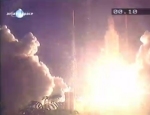 Rosetta launched. "After two previous launch attempts had been postponed Rosetta finally set off on its long journey to comet 67/P Churyumov-Gerasimenko at 0717 UT 2 March 2004. Arianespace Flight 158, with its Ariane 5 rocket and modified upper stage, successfully placed Rosetta onto an escape trajectory and out into the solar system." Rosetta On Its Way, European Space Agency, 2 Mar 2004. Comet-chasing spacecraft blasts off, NewScientist.com, 2 Mar 2004. Comet Rendezvous is a related section of the CA webpage, "Can the Theory Be Tested?"
24 February 2004
 Nature notices panspermia. [Thanks, Tim Tyler.] Earth sows its seeds in space, by Philip Ball, Nature Science Update, 23 Feb 2004. Microorganisms may have spread throughout the galaxy is a related CA What'sNEW item, 15 Nov 2003. Introduction... is a related CA webpage.
24 February 2004
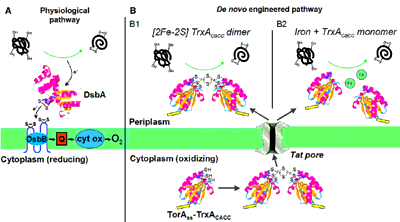 Evolution caught in the act? That's what biologists from the Universities of Texas and Michigan say about a complicated genetic engineering project in which they induced bacteria to substitute a single protein for a more complex catalytic system.
First the biologists disabled the catalytic system, without which the bacteria cannot move. Then they introduced variants of the chosen bacterial protein, thioredoxin, into isolated bacterial colonies. "To the researchers' surprise, a mutant carrying only two amino acid changes..., restored the ability of the bacteria to move." On this website we have adocated experiments that could demonstrate the sustainable creation of new genetic programs in closed systems. Therefore, we carefully studied this report and commentaries on it. Yes, we grant that the right two amino acid substitutions might plausibly occur by random mutation in nature. And this small change apparently caused the bacteria's thioredoxin to acquire a different catalytic function. However, the new metabolic pathway was not randomly found by desperate bacteria, but designed by the experimenters. Furthermore, the key to it, the succesful variant of thioredoxin, was selected by the bacteria only after the experimenters carefully installed it. After all that, the process only restored a capability previously posessed by the bacteria. Most importantly, darwinian constructive mutation cannot be demonstrated by the existence of a single, carefully staged increment. By searching diligently one may discover, for example, a typographical error that makes sense; this fact does not demonstrate that uncontrolled typos can generate lengthy new sentences. (They can't.) The darwinian tenet that pointwise mutations on existing genetic programs can create new genetic programs in a sustainable manner remains, to us, undemonstrated. We urge anyone who's interested to read the full report in Science. We invite informed comments.
23 February 2004
 Chirality from space? Maybe. Life as we know it employs only left-handed protein and right-handed sugar molecules. If life arose on this planet from random, nonliving chemicals, the exclusive chirality it now obeys is puzzling. How did life get that way? Now Sandra Pizzarello of Arizona State University, and Arthur L. Weber of the SETI Institute suggest that the modest chirality in meteorites could explain the puzzle. "The delivery of material from outer space via meteorites - despite the seeming randomness and complexity of these materials - could in fact have 'pushed' chemical evolution on Earth toward homochirality."
We welcome this elaboration on pseudo-panspermia by two veteran astrobiologists. Of course, we believe the chirality in meteorites derives from past life on their parent bodies.  Sandra Pizzarello and Arthur L. Weber, "Prebiotic Amino Acids as Asymmetric Catalysts" [text], Science, 20 Feb 2004.
Panspermia Asks New Questions is a CA webpage with more about pseudo-panspermia. Amino Acid Asymmetry in the Murchison Meteorite is a related CA webpage. Sandra Pizzarello and Arthur L. Weber, "Prebiotic Amino Acids as Asymmetric Catalysts" [text], Science, 20 Feb 2004.
Panspermia Asks New Questions is a CA webpage with more about pseudo-panspermia. Amino Acid Asymmetry in the Murchison Meteorite is a related CA webpage.
18 February 2004
Big bang revised again? "Cosmologists Paul Steinhardt and Niel Turok... theorize that the cosmos was never compacted into a single point and did not spring forth in a violent instant. Instead, the universe as we know it is a small cross section of a much grander universe whose true magnitude is hidden in dimensions we cannot perceive. What we think of as the Big Bang, they contend, was the result of a collision between our three-dimensional world and another three-dimensional world less than the width of a proton away from ours — right next to us, and yet displaced in a way that renders it invisible. Moreover, they say the Big Bang is just the latest in a cycle of cosmic collisions stretching infinitely into the past and into the future. Each collision creates the universe anew. The 13.7 -billion-year history of our cosmos is just a moment in this endless expanse of time." Wow.While it is exciting to elaborate on the big bang, it is wrong to pretend that a theory so fluid has sufficient authority to govern unrelated fields like biology. Obviously, the big bang theory does not confirm that life can originate from nonlife by natural means. Only real evidence could do that.
13 February 2004
 Nonliving to living? Seven distinguished origin-of-life theorists report on two recent international workshops concerning the origin of life and the simplest forms of life. The first, "Bridging nonliving and living matter," was held at Los Alamos National Laboratory and the Santa Fe Institute, 9-11 September 2003. Three days later, the 7th European Conference on Artificial Life (ECAL 2003) was held in Dortmund, Germany, 14-17 September 2003.
The six organizers of the earlier, New Mexico conference and Mark Bedau of Reed College write, "The transition from nonliving to living matter is usually raised in the context of the origin of life. Two recent international workshops have taken a broader view and asked how simple life forms could be synthesized in the laboratory." (Broader, or more realistic?) One approach is "top-down," by simplifying existing cells. Conversely, the "bottom-up" approach "aims to assemble artificial cells from scratch using nonliving organic and inorganic materials." Because it is so difficult, no one has succeeded at this synthesis yet. We wonder, if it is so difficult for scientists to assemble a cell from selected chemicals in a laboratory, how difficult is it for miscellaneous chemicals by themselves to assemble a cell in nature?
11 February 2004
 Astrobiology free! All twelve past issues of this quarterly magazine are available online during February. The latest archived issue, Winter 2003, contains a special collection of papers on Europa. [Thanks, Michael Paine.]
4 February 2004
 A small comet impact caused sixth century global chill? Two undergraduates in the School of Physics and Astronomy at Cardiff University, UK, calculated that a comet not much more than half a kilometre across could have caused a series of very cold summers around 536-540 AD. The cold weather caused crop failures and wide-spread starvation then. At the same time Europe suffered the Justinian Plague, possibly the first outbreak of the "Black Death".
2 February 2004
 The 8th International Conference of Bioastronomy will be held in Reykjavik, Iceland, 12-16 July 2004. Astronomers, biologists, geologists and scientists from other fields will discuss extrasolar habitable worlds, the origin and evolution of terrestrial life, life elsewhere in the solar system, life in extrasolar planetary systems and intelligent life beyond the solar system. Alan Boss of the Carnegie Institution of Washington is Chairman of Science Organizing Committee. [Thanks, Michael Paine.]
Bioastronomy 2004 - Habitable Worlds, 12-16 July 2004 (Link died: alternate.)
The 8th International Conference of Bioastronomy will be held in Reykjavik, Iceland, 12-16 July 2004. Astronomers, biologists, geologists and scientists from other fields will discuss extrasolar habitable worlds, the origin and evolution of terrestrial life, life elsewhere in the solar system, life in extrasolar planetary systems and intelligent life beyond the solar system. Alan Boss of the Carnegie Institution of Washington is Chairman of Science Organizing Committee. [Thanks, Michael Paine.]
Bioastronomy 2004 - Habitable Worlds, 12-16 July 2004 (Link died: alternate.)
30 January 2004
 Organelles transfer genes, wholesale, to eukaryotes, according to an international team of biologists based in Australia. This is yet another way for eukaryotic species to acquire genetic programs. Among the team's findings—
Jeremy N. Timmis, Michael A. Ayliffe, Chun Y. Huang and William Martin, "Endosymbiotic Gene Transfer: Organelle Genomes Forge Eukaryotic Chromosomes" [abstract], p 123-135 v 5 n 2, Nature Reviews Genetics, Feb 2004. Viruses... is a related CA webpage about gene transfer mechanisms. [Next-What'sNEW about HGT-Prev]
29 January 2004
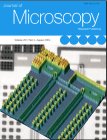 The case for past life on Mars is bolstered by Australian scientists who compared microfossils in Mars meteorite ALH84001 to bacteria found in mud around Queensland's Moreton Bay. "The fossils that we have in the meteorite are the original material – the only difference is that you need a very high-powered electron microscope to image them, to see them and basically whenever we find these fossils here on Earth, no one ever questions they were made by bacteria," said Dr. Tony Taylor from the Australian Nuclear Science and Technology Organisation. [Thanks, Lawrence Hearn, Bill Thomas and Jim Galasyn.]
25 January 2004
Mars Rover "Opportunity" returns pictures. It landed on target and radioed home at 12:05 a.m. EST today via the NASA Deep Space Network antennas in California and Australia. Its landing site within a small crater on the Meridiani Planum has the darkest terrain yet seen on Mars. Meanwhile, NASA concludes that "Spirit" has a problem with its "flash" memory; bypassing it has improved communications with Spirit. Latest News from Spirit and Opportunity, updates from JPL, NASA. Kenneth Chang, "2nd Mars Rover Is in Hole With Nice View" [text], The New York Times, 26 Jan 2004.
24 January 2004
Mars Rover "Spirit" continues to malfunction. Meanwhile, its twin, "Opportunity" is scheduled to land on Meridiani Planum on the opposite side of Mars, at 12:05 a.m. EST tomorrow, 25 January. The Jet Propulsion Laboratory website has updates. Mars Exploration Rover Mission, ongoing press releases, JPL, NASA. Life on Mars! is a related CA webpage.
16 January 2004
Wallis suggests that cometary debris, before the impact, brought microorganisms that introduced the the exotic amino acids into the biosphere. Then, newly arrived or newly evolved microorganisms employing them caused epidemics against which most native species were defenseless. At the same time, other newly introduced genetic material may have prompted an ensuing radiation of new species that were not susceptible to the epidemics.
15 January 2004
 Are normal microevolutionary processes sufficient to account for human origins? Only recently, such a question was almost heretical within mainstream science. Now, in commentary on a new human - chimp genome comparison by Andrew Clark et al., the prestigious journal Nature asks it. To be sure, the question is posed rather routinely, as if known alternative mechanisms, like regulatory changes, could somehow provide the missing ingredient. But we are very pleased that Nature admits its doubts about a basic tenet of darwinism. This small step brings us closer to bigger questions: Is any mechanism sufficient to account for new genetic programs in a genetically closed system? Can this sufficiency be demonstrated or modeled?
9 January 2004
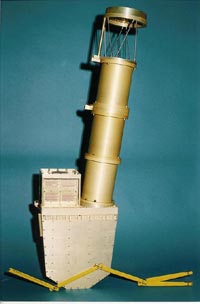 Complex organics in interstellar dust have been confirmed, the scientists managing the German mass spectrometer (CIDA) on the Stardust mission conclude. Their analysis, published this month, supports their announcement, in April 2000, that CIDA had detected complex organic compounds in interstellar dust. The thoughtful new study of 45 impacts measured en route to comet Wild 2 acknowledges many difficulties that hinder collection and interpretation of the data, but its conclusion is well-supported.
After ruling out "a series of substance classes such as minerals, metals (like iron), or pure carbon in any of its phase states," Krueger et al. determine that the dust is most likely "polymers of derivatives of the the quinone type, such as quinoline-quinones." Interestingly, one of these quinones would neatly explain a puzzling feature of the UV spectra of interstellar dust: the "hump" at 218 nanometers corresponds precisely to the main peak of o-dihydroquinone. [Thanks, Daniel Fischer.] We think that the presence of complex organic polymers in interstellar dust strengthens the case for life out there.
8 January 2004
 Isotope analysis of stratospheric bacteria is postponed. Bacteria recovered by a balloon in India will not be tested for extraterrestrial isotope signatures at Lawrence Livermore National Laboratory, 12-14 January, as planned. The filter containing the bacteria is not thin and flat enough to produce a sharply focused image in the NanoSIMS (mass spectrometer). The tests will be rescheduled after the samples are placed onto a flat substrate. This process may take several weeks.
4 January 2004
Rover "Spirit" bounced safely onto Mars at 11:35 p.m. EST, 3 January. From its landing site within Gusev Crater it transmitted early photos back to the mission's elated flight team at NASA's Jet Propulsion Laboratory in Pasadena, CA. "Spirit's task is to spend the next three months exploring for clues in rocks and soil about whether the past environment at this part of Mars was ever watery and suitable to sustain life." A twin rover, "Opportunity," is scheduled to land on the opposite side of Mars three weeks after this one.
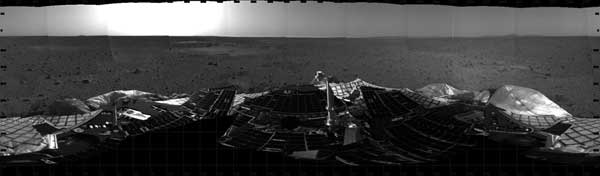 Spirit Lands On Mars and Sends Postcards, JPL, NASA, 03 Jan 2004. Spirit Hits the Sweet Spot, Science@NASA, 05 Jan 2004. Life on Mars! is a related CA webpage. Spirit Lands On Mars and Sends Postcards, JPL, NASA, 03 Jan 2004. Spirit Hits the Sweet Spot, Science@NASA, 05 Jan 2004. Life on Mars! is a related CA webpage.
3 January 2004
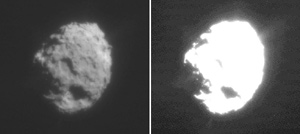 Stardust sailed safely by comet Wild 2 at 2:22 p.m. EST, yesterday, taking pictures and gathering dust samples, as planned. One surprise is that the comet looks nearly spherical. Dust collected in special aerogel panels during the fly-by is scheduled to reutrn to Earth, 15 January 2006. Meanwhile, we await confirmation of earlier results from measurements by on-board instruments, including the German-made mass spectrometer, CIDA.
| ||||
COSMIC ANCESTRY | Quick Guide | What'sNEW - Later - Earlier - Index | by Brig Klyce | All Rights Reserved |
 No detailed correspondence between thermodynamics and evolution has ever been forthcoming.
 31 Mar 2004
 Lawrence Livermore National Laboratory will measure isotope ratios...