|
Seven independent data sets suggest that invertebrates diverged from chordates about a billion years ago, about twice as long ago as the Cambrian. — Gregory A. Wray et al., 1996 (1)
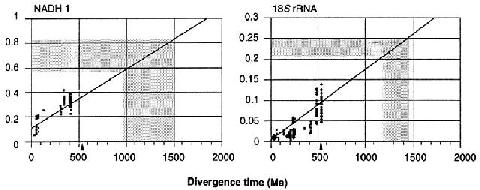
Three scientists have analyzed the rates of divergence for seven metazoan genes with interesting results. Although the data are rather loose, all seem to indicate that these genes began to diverge from their respective common ancestor genes much longer ago than the Cambrian explosion. The three scientists conclude, "...the only reasonable interpretation is that the metazoan phyla began to diverge long before the Cambrian." This conclusion directly challenges the consensus of paleontology that dates the Cambrian explosion at 570 — or maybe only 530 — million years ago. But when the data are interpreted within the neo-Darwinian paradigm, this conclusion is not unreasonable.
The data look different from the perspective of Cosmic Ancestry. According to this paradigm, the genes for evolutionary advances were delivered to Earth in the same manner as life on Earth originally. Life originally came as hardy cells such as bacterial spores, delivered by comets probably. Genes for further evolution could come within similar cells, or within viruses, also carried by comets. Such genes would reside within lower life forms as silent DNA until all the pieces were in place for the next evolutionary step. The pieces would include:
- evolutionary developments (mouths before teeth),
- genetic developments (all the genes necessary for lungs before lungs), and
- environmental developments (an oxygen biosphere before oxygen metabolism).
The data also look different to another group of geneticists who, in a more recent article, dispute the conclusion of Wray et al. The January, 1998, report says, "A published analysis of seven gene loci that concludes that the corresponding divergence times are 1,200 and 1,000 million years ago is shown to be flawed because it extrapolates from slow-evolving vertebrates to faster-evolving invertebrates, as well as in other ways" (2). Both groups of researchers use a number of methods to "normalize" their data. One wonders if such "molecular clocks" are too temperamental for everyday use, at this stage.
However the dispute turns out, Cosmic Ancestry requires that genes precede the phenotypic expression of themselves, whereas neo-Darwinism requires the immediate expression of genes. So, if life evolves according to Cosmic Ancestry, we would not be surprised to find that genes are older than the resulting phenotypes.
Updates
 "Re-evaluating molecular clock maximum age calibrations revives pre-Ediacaran divergence estimates for animals," by Orin M. Lole Durbin et al, ScienceAdvances, 02 Oct 2026. "Re-evaluating molecular clock maximum age calibrations revives pre-Ediacaran divergence estimates for animals," by Orin M. Lole Durbin et al, ScienceAdvances, 02 Oct 2026.
"On the origin of animals and placental mammals...," by Sandra Álvarez-Carretero et al, Molecular Biology and Evolution, 19 Aug 2026.
The fossil record ...is inherently incomplete and requires careful interpretation.
"The fungal RIP hypermutator mechanism has deep eukaryotic roots," by Fabienne Malagnac et al, TiG, Sep 2026.
...mechanisms of genome defense against TEs likely predate the diversification of eukaryotes.
"Even ancient bacteria possessed intercellular communication structures like humans today, study finds," by Arne Claussen, Heinrich-Heine University Duesseldorf, via PhysOrg.com, 31 Aug 2026; re: doi:10.1038/s44318-026-00893-y, by T.A. Müller et al, EMBO J, 2026.
Our research ..suggests that the functional principles of higher organisms were already present in simple, multicellular bacteria....
 03 Jun 2026: Immune proteins in human cells could be far more ancient than we'd thought. 03 Jun 2026: Immune proteins in human cells could be far more ancient than we'd thought.
"The archaeal roots of eukaryotic life," by Valerie De Anda et al, PNAS [abstract], 13 Mar 2026.
Asgards have an array of genes, previously thought exclusive to eukaryotes....
23 Feb 2026: Human cognition genes predate tetrapods....
"Oxygen metabolism in descendants of the archaeal-eukaryotic ancestor," by Kathryn E. Appler et al, Nature, 18 Feb 2026.
These archaea encode hallmark proteins of an aerobic lifestyle....
"Co-option of an ancestral cloacal regulatory landscape during digit evolution," by Hintermann, A., Bolt, C.C., Hawkins, M.B. et al, Nature, 04 Dec 2025.
...we propose that the current regulatory landscape active in distal limbs was co-opted as a whole in tetrapods from a pre-existing cloacal regulatory machinery.
24 Oct 2025: Fungi evolved much earlier than the fossil record indicates....
"A root development gene that's older than root development," Kobe University via Phys.Org; re: doi:10.1111/nph.70181, by Kentaro P. Iwata et al, New Phytologist, 25 May 2025.
"Microtubules in Asgard archaea," by Florian Wollweber et al, Cell, 21 Mar 2025.
Our findings suggest a pre-eukaryotic origin of microtubules....
"Proteomic analysis of the sponge Aggregation Factor implicates an ancient toolkit for allorecognition and adhesion in animals," by Fabian Ruperti et al, PNAS, 19 Dec 2024.
"The emergence of Sox and POU transcription factors predates the origins of animal stem cells," by Gao, Y., Tan, D.S., Girbig, M. et al, Nat Commun, 14 Nov 2024.
Our findings imply that the evolution of animal stem cells might have involved the exaptation of a pre-existing set of transcription factors....; and commentary on Phys.Org, 15 Nov 2024.
11 Nov 2024: These observations suggest that the genetic programs responsible for embryonic development were already present before the emergence of animal life....
"Horizontal Gene Transfer Constrains the Timing of Methanogen Evolution," by Joanna M. Wolfe and Gregory P. Fournier, BioRxiv, 01 Feb 2018.
14 Dec 2023: Are the genes actually too old?
"Stepwise emergence of the neuronal gene expression program in early animal evolution," by Sebastián R. Najle et al., Cell, 19 Sep 2023.
Our findings indicate that key neuronal developmental and effector gene modules evolved before the advent of cnidarian/bilaterian neurons....
22 Jun 2023: ...a wholly separate eukaryotic phylogeny prior to the Last Eukaryotic Common Ancestor (LECA).
"The dawn of relaxed phylogenetics," by Jacob L. Steenwyk and Antonis Rokas, PLoS Biol, 25 Jan 2023.
...clock-like evolution is relatively rare and that most genes exhibit non-clock-like rates of sequence evolution.
"Genes for seeds arose early in plant evolution, ferns reveal," by Elizabeth Pennisi, Science, 22 Sep 2022.
17 Sep 2022: Two bacterial enzymes are "remarkably similar" to human DNA repair enzymes.
31 Aug 2022: Genes for meiotic sex were requisitioned from prokaryotes.
27 Aug 2022:
...animals arose only after the accumulation of genes....
"Calpains in cyanobacteria and the origin of calpains" by Veselenyiova, D., Hutarova, L., Lukacova, A. et al., Scientific Reports, 16 Aug 2022.
However, their function in bacteria remains unknown.
"The physiological cargo adaptor of kinesin-2 functions as an evolutionary conserved lockpick" by Augustine Cleetus, Georg Merck et al., PNAS, 10 Aug 2022.
Surprisingly, the orthologous adaptor proteins from the unicellular green algae Chlamydomonas reinhardtii also fully activated the kinesin-2 from worm, even though C. reinhardtii itself lacks a homodimeric kinesin-2 motor. The latter suggested that a motor activation mechanism similar to the C. elegans model existed already well before metazoans evolved....
"Investigating the reliability of molecular estimates of evolutionary time when substitution rates and speciation rates vary" by Andrew M. Ritchie et al., BMC Ecol. and Evol., 10 May 2022.
"Somatic mutation rates scale with lifespan across mammals" by Alex Cagan, Adrian Baez-Ortega et al., doi:10.1038/s41586-022-04618-z, Nature, 13 Apr 2022.
"Premetazoan Origin of Neuropeptide Signaling" by Luis Alfonso Yañez-Guerra et al., doi:10.1093/molbev/msac051, Mol. Biol. Evol., 02 May 2022. Our findings revealed that secreted neuropeptide homologs derived from longer precursors have premetazoan origins and thus evolved before neurons.
Biomineralization: Integrating mechanism and evolutionary history by Pupa U. P. A. Gilbert et al., doi:10.1126/sciadv.abl9653, Science Advances, 09 Mar 2022. ...the nonbiomineralizing ancestors of all the phyla that commenced biomineralization in the Ediacaran, Cambrian, and Ordovician Periods very likely had the protein families required for all the functions identified by the integrated model....
14 Aug 2021: "Molecular time trees ...at odds with the record of fossil plants...."
07 Apr 2021: Genes underlying oxygenic photosynthesis appear to be as old as life.
07 Mar 2021: Genes allowing oxygen metabolism were present among bacteria 3.1 billion years ago....
12 Feb 2021: the origin of tetrapods was something waiting to happen.
Histone variants in archaea and the evolution of combinatorial chromatin complexity by Kathryn M. Stevens et al., doi:10.1073/pnas.2007056117, PNAS, 07 Dec 2020. We conclude that combinatorially complex histone-based chromatin is not restricted to eukaryotes and likely predates their emergence.
The genetic basis for PRC1 complex diversity emerged early in animal evolution by James M. Gahan et al., doi:10.1073/pnas.2005136117, PNAS, 31 Aug 2020.
20 Jun 2020: Angiosperm genes look ∼70 million years too old.
Bacterial flagellar motor PL-ring disassembly subcomplexes are widespread and ancient by Mohammed Kaplan et al., doi:10.1073/pnas.1916935117, PNAS, 02 Apr 2020.
26 Jan 2020: Antioxident enzymes in the last universal common ancestor, far predating the great oxygenation event.
A reservoir of 'historical' antibiotic resistance genes in remote pristine Antarctic soils by Marc W. Van Goethem et al., Microbiome, 23 Feb 2018.
Early evolution of neurons by William B. Kristan Jr., Current Biology, 24 Oct 2016. ...singlecelled organisms (protozoa and even bacteria) have homologs of neuronal developmental genes. The functions of these molecules in organisms without neurons is unknown....
26 Sep 2019: Essential eukaryotic genes are very old and are shared with large viruses.
New Hybrid Species Remix Old Genes Creatively by Jonathan Lambert, Quanta, 10 Sep 2019. How could a speciation gene be orders of magnitude older than the actual speciation?
16 Aug 2019: There may be more genes in the collective human microbiome than stars in the observable universe, and at least half of these genes appear to be unique to each individual.... Harvard Medical School, 14 Aug 2019.
15 Aug 2019: Archaebacteria with ESPs have been cultured.
02 Aug 2019: ...ancestor of all multicellular animals ...already possessed an extremely complex genome.
Cuttlefish Arms Are Not So Different From Yours by Carl Zimmer, The New York Times, 18 Jun 2019.
27 May 2019: de novo gene birth
Evolution of nitric oxide regulation of gut function by Junko Yaguchi and Shunsuke Yaguchi, PNAS, 19 Mar 2018. Our results indicate that NO-dependent pylorus regulation is a shared feature within the deuterostomes, and we speculate that it was a characteristic of stem deuterostomes. Translation: It looks like the genes were there all along.
20 Feb 2019: The Cambrian Explosion was sudden.
22 Aug 2018: LUCA before LHB?
29 Jul 2018: ...the one-celled ancestor of animals... was already well-equipped for multicellular life.
15 May 2018: ...many genes typically associated with metazoan functions actually pre-date animals themselves....
Chronological Clues to Life's Early History Lurk in Gene Transfers by Jordana Cepelewicz, Quanta, 24 Apr 2018.
The Ancient Origins of Neural Substrates for Land Walking by Heekyung Jung, Myungin Baek et al., Cell, 08 Feb 2018. We show that the neural substrates of bipedalism are present in the little skate Leucoraja erinacea, whose common ancestor with tetrapods existed ~420 million years ago.
Embryophyte stress signaling evolved in the algal progenitors of land plants by Jan de Vries et al., PNAS, online 26 Mar 2018. ...this suggests that the genetic toolkit for the ABA-signaling pathway was present already during the earliest steps of land plant evolution.
Early Archean origin of heterodimeric Photosystem I by Tanai Cardonat, Heliyon, 06 Mar 2018; and commentary:
 Photosynthesis Began a Billion Years Earlier Than Originally Believed, SciTechDaily, 06 Mar 2018. Photosynthesis Began a Billion Years Earlier Than Originally Believed, SciTechDaily, 06 Mar 2018.
20 Feb 2018: Molecular clock analyses always come up with older dates than fossils....
Myosin repertoire expansion coincides with eukaryotic diversification in the Mesoproterozoic era by Martin Kollmar and Stefanie Mühlhausen, doi:10.1186/s12862-017-1056-2, BMC Evolutionary Biology, online 04 Sep 2017. The last eukaryotic common ancestor already had an amazingly complex cell possessing genomic and cellular features such as spliceosomal introns, mitochondria, cilia-dependent motility, and a cytoskeleton together with several intracellular transport systems.
Spontaneous mutation rate is a plastic trait associated with population density across domains of life by Rok Krašovec, Huw Richards et al., doi:10.1371/journal.pbio.2002731, PLoS Biology, online 24 Aug 2017. ...higher population densities are associated with lower mutation rates. ...this density-associated mutation-rate plasticity (DAMP)... requires a protein that avoids mutation by cleaning cells of oxidatively damaged guanine nucleotides....
27 Jul 2017: Geneticists in Scotland....
Early Paleocene landbird supports rapid phylogenetic and morphological diversification of crown birds after the K–Pg mass extinction by Daniel T. Ksepka et al., doi:10.1073/pnas.1700188114, PNAS, online 10 Jul 2017. Molecular (DNA) studies suggest that birds radiated rapidly in the wake of the Cretaceous-Paleogene mass extinction (66 Ma), diversifying into nearly all the major groups we recognize today.
08 Mar 2017: New estimate predates earliest fossil evidence by 800 million years.
07 Mar 2017: ...the origin of viral replicative modules seems likely to hark all the way back to the precellular era.
Ancient coexistence of norepinephrine, tyramine, and octopamine signaling in bilaterians by Philipp Bauknecht and Gáspár Jékely, doi:10.1186/s12915-016-0341-7, BMC Biology, 30 Jan 2017.
26 Feb 2017: ...the common ancestor ...did encode many of the protein domains of all three super-kingdoms.
19 Feb 2017: Archeae contain many eukaryotic signature proteins (ESPs).
11 Jan 2017: ...they've been around for hundreds of millions of years.
17 Oct 2016: ...many genes involved in these regulatory processes have a premetazoan origin.
11 Oct 2016: The presence of the ISB stromatolites is in accord with life's origin in the Hadean eon.
The Deep Origin and Recent Loss of Venom Toxin Genes in Rattlesnakes by Noah L. Dowell, Matt W. Giorgianni et al., doi:10.1016/j.cub.2016.07.038, Current Biology, 15 Sep 2016. ...The genes of a specialized heterodimeric neurotoxin predate the origin of rattlesnakes and were present in their last common ancestor (~22 mya).
Variation in the molecular clock of primates by Priya Moorjani, Carlos Eduardo G. Amorim et al., doi:10.1073/pnas.1600374113, PNAS, 20 Sep 2016. This finding suggests that events in primate evolution are most reliably dated using CpG transitions.
Evolution may have moved at a furious pace on a much warmer Earth, UNC Healthcare (+Newswise), 6 Jul 2016. ...Rates of spontaneous DNA mutation could have been 4,000 times higher than they are now, thanks to a hotter planet billions of years ago.
On the Archaeal Origins of Eukaryotes... by Gautam Dey et al., doi:10.1016/j.tcb.2016.03.009, p 476-485 v 26, Trends in Cell Biology, Jul 2016. Remarkably, many of these [archaeal genomes] contain sequences homologous to genes that play critical roles in the organization of eukaryotic cells as they grow and divide, which were previously thought to be unique to eukaryotes.
Evolution: Gene regulation in transition by David S. Booth and Nicole King, doi:10.1038/nature18447, Nature, online 15 Jun 2016. ...It now seems that some gene-regulatory networks pre-date animal origins and were recruited wholesale for the regulation of new developmental processes.
13 Jun 2016: Early complexity supports panspermia....
Genetic Time Travel by Johannes Krause, Svante Pääbo, doi:10.1534/genetics.116.187856, Genetics, 01 May 2016.
A genetic method for dating ancient genomes provides a direct estimate of human generation interval in the last 45,000 years by Priya Moorjani et al., doi:10.1073/pnas.1514696113, PNAS, online 2 May 2016.
30 Apr 2016: ...The genetic basis for the evolutionary transition [to multicellularity] emerges much earlier than anticipated....
Cis-regulatory architecture of a brain signaling center predates the origin of chordates by Yao Yao et al., doi:10.1038/ng.3542, Nature Genetics, online 11 Apr 2016.
24 Apr 2016: ...The unicellular ancestor of Metazoa already had a complex gene repertoire involved in multicellular functions....
Comparative Genomics Reveals the Origins and Diversity of Arthropod Immune Systems by William J. Palmer and Francis M. Jiggins, doi:10.1093/molbev/msv093, Mol. Biol. Evol., 22 Apr 2015. "Our results confirm an ancient origin for the innate immune system, predating the split between protostomes and deuterostomes."
Sterol and genomic analyses validate the sponge biomarker hypothesis by David A. Gold et al., doi:10.1073/pnas.1512614113, PNAS, 22 Feb 2016.
The ancestral gene repertoire of animal stem cells by Alexandre Alié et al., doi:10.1073/pnas.1514789112, PNAS, 22 Dec 2015. ...Most of these stem-cell genes predate animal origin....
29 Oct 2015: ...The last unicellular ancestor of animals was already capable of elaborate specification of cell types.
16 Oct 2015: Algal ancestor of land plants was preadapted for symbiosis.
Dating Tips for Divergence-Time Estimation, by Joseph E. O'Reilly et al., doi:10.1016/j.tig.2015.08.001, Trends in Genetics, 1 Oct 2015.
9 Oct 2015: [T]he signature advanced functional systems of the eukaryotic cells were already present in the last eukaryotic common ancestor....
Bettina Strasser et al., "Convergent evolution of cysteine-rich proteins in feathers and hair," doi:10.1186/s12862-015-0360-y, BMC Evolutionary Biology, 7 May 2015. "An ancestral gene with this structure was likely already present in the last common ancestor of birds, reptiles and mammals."
7 May 2015: Our results provide strong support for hypotheses in which the eukaryotic host evolved from a bona fide archaeon, and demonstrate that many components that underpin eukaryote-specific features were already present in that ancestor. This provided the host with a rich genomic 'starter-kit' to support the increase in the cellular and genomic complexity that is characteristic of eukaryotes.
Jose C. Clemente, Erica C. Pehrsson et al., "The microbiome of uncontacted Amerindians," doi:10.1126/sciadv.1500183, Science Advances, 17 Apr 2015; and commentary:
Bacterial flora of remote tribespeople carries antibiotic resistance genes by Michael Purdy, Washington University in St. Louis; and
Resistance to antibiotics found in isolated Amazonian tribe by Ann Gibbons, Science, 17 Apr 2015. ...Antibiotic resistance is ancient, diverse, and astonishingly widespread in nature....
Ewen Callaway, "DNA mutation clock proves tough to set" [html], doi:10.1038/519139a, Nature, 12 Mar 2015.
Arunkumar Krishnan et al., "The GPCR repertoire in the demosponge Amphimedon queenslandica: insights into the GPCR system at the early divergence of animals" [abstract], doi:10.1186/s12862-014-0270-4, n 270 v 14, BMC Evolutionary Biology, online 21 Dec 2014.
26 Sep 2014: 23,849 anthropoid-specific constrained (ASC) regions with "robust functional signatures"
12 Aug 2014: ...The set of known underground reactions has a significant potential both to increase fitness in existing environments and to exploit new nutrient sources.
Arnau Sebé-Pedrós et al., "Unexpected Repertoire of Metazoan Transcription Factors in the Unicellular Holozoan Capsaspora owczarzaki" [abstract], doi:10.1093/molbev/msq309, p 1241-1254 v 28, Mol Biol Evol, online 17 Nov 2010; and followup:
Hiroshi Suga et al., "The Capsaspora genome reveals a complex unicellular prehistory of animals" [html], doi:10.1038/ncomms3325, n 2325 v 4, Nature Communications, online 14 Aug 2013.
Steven D. Quistad et al., "Evolution of TNF-induced apoptosis reveals 550 My of functional conservation" [abstract], doi:10.1073/pnas.1405912111, Proc. Natl. Acad. Sci. USA, online 9 Jun 2014; and commentary:
Ancient Apoptosis by Kate Yandell, The Scientist, 9 Jun 2014. Humans and coral share a cell-death pathway that has been conserved between them for more than half a billion years.
Michaela Schwaiger et al., "Evolutionary conservation of the eumetazoan gene regulatory landscape" [abstract], doi:10.1101/gr.162529.113, Genome Res., online 18 Mar 2014. "Our results suggest that complex gene regulation originated at least 600 million yr ago, predating the common ancestor of eumetazoans."
Dwi Susanti et al., "Thioredoxin targets fundamental processes in a methane-producing archaeon, Methanocaldococcus jannaschii" [abstract], doi:10.1073/pnas.1324240111, Proc. Natl. Acad. Sci. USA, online 6 Feb 2014. "...Our work raises the possibility that Trx functioned... at least 2.5 billion years ago." [Or existed, anyway.] Also see commentary: Discovery opens up new areas of microbiology, evolutionary biology by Zeke Barlow, Virginia Tech News, 7 Feb 2014.
Mario dos Reis et al., "Neither phylogenomic nor palaeontological data support a Palaeogene origin of placental mammals" [Open Access abstract], doi:10.1098/rsbl.2013.1003, n 1 v 1, Biol. Lett., 15 Jan 2014; and commentary:
Clocks Versus Rocks by Ed Yong, The Scientist, 14 Jan 2014.
2 Jan 2014: It appears that much of the genetic machinery necessary for a nervous system was present in the ancestor of all extant animals.
20 Dec 2013: Eugene V. Koonin's book, The Logic of Chance
28 Nov 2013: This means that a large percentage of the metazoan and embryophyte regulatory toolkits were already in place before their origin and divergence.
16 Nov 2013: ...Some genes and proteins ...specific to being multicellular in animals are already present in their unicellular relatives.
Masato Nikaido, Hideki Noguchi, Hidenori Nishihara et al., "Coelacanth genomes reveal signatures for evolutionary transition from water to land" [Open Access abstract], doi:10.1101/gr.158105.113, Genome Res., online 22 Jul 2013. "We expect that some tetrapod-like genes already existed in the genomes of ancestral Sarcopterygii before the terrestrial adaptation...."
Alvaro Ingles-Prieto et al., "Conservation of Protein Structure over Four Billion Years" [abstract], doi:10.1016/j.str.2013.06.020, Structure, online 8 Aug 2013.
Martine M Zilversmit et al., "Hypervariable antigen genes in malaria have ancient roots" [abstract], doi:10.1186/1471-2148-13-110, n110 v13, BMC Evolutionary Biology, 31 May 2013. "Despite the remarkable diversity and rapid evolution found in these loci..., the basic structure of these domains and the gene family is surprisingly old and stable."
28 May 2013: A large fraction of human PSs were already present in the last common ancestor of flies, mollusks, urchins, and mammals.
Marc Nomaksteinsky et al., "Ancient origin of somatic and visceral neurons" [Open Access abstract], doi:10.1186/1741-7007-11-53, v11 n53; and commentary by Paola Bertucci and Detlev Arendt, "Somatic and visceral nervous systems - an ancient duality" [abstract], doi:10.1186/1741-7007-11-54, v11 n54, BMC Biology, 30 Apr 2013.
"...A molecular underpinning for the functional allocation of neurons ...was inherited from the urbilaterian ancestor...."
3 May 2013: The origin of...?
18 Apr 2013: Earth was seeded by panspermia. (Points to an article invoking Moore's Law.)
Henan Zhu et al., "Hippo pathway genes developed varied exon numbers and coevolved functional domains in metazoans for species specific growth control" [abstract | pdf], doi:10.1186/1471-2148-13-76, n76 v13, BMC Evolutionary Biology, 1 Apr 2013. "The Hippo pathway was initially assumed to be a metazoan novelty, because the sole effector Yorkie was not detected in the most basal metazoan A. queenslandica. However, as several holozoan genomes were recently sequenced and published, yorkie was identified in two non-metazoan lineages: the unicellular amoeboid Capsaspora owczarzaki and the choanoflagellate Monosiga brevicollis."
Michael Clarke, Amanda J Lohan et al., "Genome of Acanthamoeba castellanii highlights extensive lateral gene transfer and early evolution of tyrosine kinase signaling" [abstract], doi:10.1186/gb-2013-14-2-r11, R11 v14, Genome Biology, 1 Feb 2013; and commentary:
Primitive forms of complex human processes identified in Amoeba, UCD Conway Institute, 27 Feb 2013.
Researchers Include Humans in Most Comprehensive Tree of Life to Date, University of Florida on Newswise, 6 Feb 2013. "One leading analysis based on genomic data alone predicted that a number of placental mammal lineages existed in the Late Cretaceous and survived the Cretaceous-Paleogene extinction. '...But our work using direct evidence from the fossil record tells a different story....'"
Anne D. Yoder, "Fossils Versus Clocks" [first paragraph], doi:10.1126/science.1233999, p656-658 v339, Science, 8 Feb 2013.
31 Oct 2012: A simple route to animal vision?
Aylwyn Scally and Richard Durbin, "Revising the human mutation rate: implications for understanding human evolution" [abstract], doi:10.1038/nrg3295, p745-753 v13, Nature Reviews Genetics, Oct 2012. "It is now possible to make direct measurements of the mutation rate in modern humans using next-generation sequencing. These measurements reveal a value that is approximately half of that previously derived from fossil calibration...."
Marc P Hoeppner and Anthony M Poole, "Comparative genomics of eukaryotic small nucleolar RNAs reveals deep evolutionary ancestry amidst ongoing intragenomic mobility" [abstract], doi:10.1186/1471-2148-12-183, n183 v12, BMC Evolutionary Biology, 15 Sep 2012.
16 Sept 2012: Very large viruses coexisted with or preceded the first primordial cells.
6 Sep 2012: A strikingly large repertoire ...appears to have been present ...consistent with the 'complexity early' view of eukaryotic evolution.
23 Jul 2012: Surprisingly, the genome of the Poriferan demosponge, Amphimedon queenslandica, contains an almost complete set of genes homologous to those found in mammalian synapses....
28 Jun 2012: ...A muscle protein core set... was already present in unicellular organisms before the origin of multicellular animals.
24 Mar 2012: ...The contribution of EVEs to cellular function... is exceeding even the boldest predictions. — Cédric Feschotte and Clément Gilbert
19 Mar 2012: ...Whether the course of Evolution can at all reasonably be represented as an unpacking of an original complex.... — William Bateson
15 Mar 2012: The origin of the exquisitely complex vertebrate brain is somewhat mysterious.
Veronica J. Murtagh et al., "Evolutionary history of novel genes on the tammar wallaby Y chromosome: Implications for sex chromosome evolution" [abstract], doi:10.1101/gr.120790.111, p498-507 v22, Genome Res., 22 Mar 2012. "...The small marsupial Y chromosome is surprisingly rich in ancient genes...."
 Edward O. Wilson's new idea is the subject of a reply from Ken Jopp, 15 Jan 2012. Edward O. Wilson's new idea is the subject of a reply from Ken Jopp, 15 Jan 2012.
Rajendhran Rajakumar et al., "Ancestral Developmental Potential Facilitates Parallel Evolution in Ants" [abstract], doi:10.1126/science.1211451, p79-82 v335, Science, 6 Jan 2010. "The recurrent induction of ancestral developmental potential may facilitate the adaptive and parallel evolution of phenotypes."
Douglas H. Erwin et al., "The Cambrian Conundrum: Early Divergence and Later Ecological Success in the Early History of Animals" [abstract], doi:10.1126/science.1206375, p1091-1097 v334, Science, 25 Nov 2011.
19 Nov 2011: Where do new genes come from?
2 Nov 2011: Almost every month now we are seeing genes that were supposed to be exclusive to metazoans that are already present in their single-cell relatives.
7 Oct 2011: The protein was there to begin with.... — Gustavo Caetano-Anollés, University of Illinois.
26 Sep 2011: More than 1500 genes necessary for the evolution of pregnancy in placental mammals were recruited into service....
Laura Eme et al., "The phylogenomic analysis of the Anaphase Promoting Complex and its targets points to complex and modern-like control of the cell cycle in the last common ancestor of eukaryotes" [abstract], doi:10.1186/1471-2148-11-26, v11 n265, BMC Evolutionary Biology, online 23 Sep 2011. "...We showed that 24 out of 37 known APC/C subunits, adaptors/co-activators and main targets, were already present in the Last Eukaryotic Common Ancestor (LECA) and were well conserved to a few exceptions in all present-day eukaryotic lineages."
Hélène Morlon et al., "Reconciling molecular phylogenies with the fossil record" [abstract], doi:10.1073/pnas.1102543108, Proc. Natl. Acad. Sci. USA, online 19 Sep 2011. "...striking inconsistency between phylogenies and fossils...."
microRNAs, Molecular Clocks and Metazoan Macroevolution, Origins Forum Abstract, by Kevin J. Peterson, Harvard Origins of Life Initiative, 21 Sep 2011. "A compilation ...indicate that the major animal clades diverged many tens of millions of years before their first appearance in the fossil record, establishing a macroevolutionary lag between the establishment of their developmental toolkits during the Cryogenian (850-635 Ma), and their later ecological success during the Ediacaran and Cambrian periods."
5 Sep 2011: A gene for nervous systems before there were nervous systems on Earth.
Laura Wegener Parfrey et al., "Estimating the timing of early eukaryotic diversification with multigene molecular clocks" [abstract], doi:10.1073/pnas.1110633108, Proc. Natl. Acad. Sci. USA, online 2 Aug 2011. "Our time estimates also indicate that the major clades of eukaryotes diverged before 1000 Ma, with most or all probably diverging before 1200 Ma. Fossils, however, suggest that diversity within major extant clades expanded later, beginning about 800 Ma...."
23 Jul 2011: Transposable Elements (TEs) appear to have installed genetic programs implicated in 99 different primate-specific traits.
Andrew Heidel et al., "Phylogeny-wide analysis of social amoeba genomes highlights ancient origins for complex intercellular communication" [abstract], doi:10.1101/gr.121137.111, Genome Research, online 14 Jul 2011.
12 Jul 2011: Genetic instructions for developing limbs and digits were present in primitive fish millions of years before their descendants first crawled on to land....
18 Jun 2011: ...The tool kit for more complex plant architectures was already in place long before angiosperms evolved.
26 May 2011: The common ancestor of life on Earth had more functional protein domains than the first cells!
18 May 2011: ...not only before the advent of the nervous system, but probably even before the advent of multicellularity.
13 May 2011: Many scientists now argue that viruses contain a genetic archive that's been circulating the planet for billions of years.
Qiye He et al., "High conservation of transcription factor binding and evidence for combinatorial regulation across six Drosophila species" [abstract], doi:10.1038/ng.808, p 414-420 v43, Nature Genetics, 1 May 2011; and a review:
...Study suggests that successful blueprints are recycled by evolution, Research Institute of Molecular Pathology, 14 Apr 2011.
Genes Older than Earth? is a related new webpage, posted 8 Feb 2011.
23 Jan 2011: Genes for using oxygen appeared... around 2.8 billion years ago, long before oxygen began accumulating....
18 Jan 2011: Many features appear to have originated more than once in the history of life on Earth.
11 Jan 2011: Anomalies in mainstream evolutionary theory have prompted a major amendment to darwinism.
23 Dec 2010: ...A primordial ...polymer emerged ...as a pre-adaptation....
2 Nov 2010: The software problem for the origin of life is not ignored, for once....
25 Oct 2010: Genes are either very old, or they appear suddenly, without predecessors.
Ancient Virus Found Hiding Out in Finch Genome by Cassandra Willyard, Science Now, 28 Sep 2010. "A newly uncovered 'viral fossil' buried deep in the genome of the zebra finch indicates that the hepatitis B family of viruses—known as hepadnaviruses—originated at least 19 million years ago. Together with recent findings on other viruses, the work suggests that all viruses may be much older than thought."
9 Sep 2010: Evolutionary origin of HPG?
Jan Postberg et al., "The evolutionary history of histone H3 suggests a deep eukaryotic root of chromatin modifying mechanisms" [abstract], doi:10.1186/1471-2148-10-259, v10 n259, BMC Evolutionary Biology, 25 Aug 2010.
4 Aug 2010: Sponges have many genes that are used only by more advanced animals for encoding organs, nerves and muscles.
Frederico G. Hoffmann et al., "Gene cooption and convergent evolution of oxygen transport hemoglobins in jawed and jawless vertebrates" [doi link], doi:10.1073/pnas.1006756107, Proc. Natl. Acad. Sci. USA, online Jul 2010. "...Precursors of the four main globin gene lineages were all present in the common ancestor of extant vertebrates...."
23 Jul 2010: The cell, and indeed evolution, can dial up these microRNAs very flexibly in different cells to address various targets, and they only need one protein complex to come and do the job.
4 Jul 2010: ...[A] new mechanism for how mammals acquire genes — includes evidence of more genes older than they were expected to be.
2 Jun 2010: ...Many of the key genes ...crucial for metazoan origins have a much earlier origin.
1 May 2010: A dual-function gene is very old according to a pair of German microbiologists.
28 Apr 2010: The conserved gene systems revealed by the plant-vertebrate phenologs illustrate a more ancient homology than the 'deep homology' of metazoans that is currently a focus of evolutionary developmental biology (evo-devo).
Alla Katsnelson, "Ancient aminos" [link], p19 v24 n4, The Scientist, 1 Apr 2010. "All of this suggested that the protein was much older than many suspected."
Stephen A. Smith et al., "An uncorrelated relaxed-clock analysis suggests an earlier origin for flowering plants" [abstract], doi:10.1073/pnas.1001225107, Proc. Natl. Acad. Sci. USA, online 16 Mar 2010.
24 Sep 2009: TEs are probably as old as life itself....
Zack Papper et al., "Ancient origin of placental expression in the growth hormone genes of anthropoid primates" [OA abstract], doi:10.1073/pnas.0908377106, Proc. Natl. Acad. Sci. USA, online 18 Sep 2009. "...suggests that the single-copy ancestral anthropoid gene had other as yet undescribed functions that were subsequently subfunctionalized or that some of the more recent gene duplicates have gained previously undescribed functions." The former suggestion would support cosmic ancestry — the latter, strict darwinism.
17 Sep 2009: The gain and loss of exons has contributed to the evolution of new features.
4 Sep 2009 "...De Novo Genes" is the subject of a new CA webpage.
26 Aug 2009: "The Origin of Life on Earth" in a Scientific American Special Issue: "Understanding Origins".
3 Jul 2009: Sponges don't have a nervous system, or even neurons, but they do have a surprising number of the building blocks....
Yuri I. Wolf et al., "The universal distribution of evolutionary rates of genes and distinct characteristics of eukaryotic genes of different apparent ages" [OA abstract], doi:10.1073/pnas.0901808106, Proc. Natl. Acad. Sci. USA, online 7 Apr 2009.
Research links evolution of fins and limbs with that of gills, The Univesity of Chicago, 23 Mar 2009. "...The genetic circuitry that patterns paired appendages (arms, legs and fins) has a deep evolutionary origin that actually predates the origin of paired appendages themselves."
Jianli Wang, Alison P. Lee et al., "Large Number of Ultraconserved Elements Were Already Present in the Jawed Vertebrate Ancestor" [abstract], doi:10.1093/molbev/msn278, p 487-490 v 26, Molecular Biology and Evolution, 3 Mar 2009 (online 3 Dec 2008).
Matthew D. Herron et al., "Triassic origin and early radiation of multicellular volvocine algae" [abstract], doi:10.1073/pnas.0811205106 , p 3254-3258 v 106, Proc. Natl. Acad. Sci. USA, 3 Mar 2009. "...All of these changes were previously thought to have occurred in the last 50-75 million years.... Using a multigene data set with multiple fossil calibrations.... Our results show that Volvox diverged from unicellular ancestors at least 200 million years ago."
3 Mar 2009: For microbes, it appears that almost all of their major evolution took place before we have any record of them.....
27 Feb 2009: It is well documented that genes of viral origin are used by eukaryotes to ensure physiological functions....
A Much Earlier Start for Animals, by Phil Berardelli, ScienceNOW Daily News, 4 Feb 2009.
29 Jan 2009: The placula already had all the genes necessary to make all the building blocks [of a nervous system]....
28 Jan 2009: Lignin has been found in marine algae.
7 Jan 2009: Latent evolutionary potential was realized soon after environmental limitations were removed.
Snails and humans use same genes to tell right from left, EurekAlert!, 21 Dec 2008.
Seabed tracks suggest new origin of animal life, doi:10.1038/news.2008.1242, Nature.com, 21 Nov 2008.
Single-Celled Giant Upends Early Evolution, by Michael Reilly, Discovery News, 20 Nov 2008.
Discovery of giant roaming deep sea protist provides new perspective on animal evolution, PhysOrg.com, 20 Nov 2008. A possible account for the "wriggling tracks of worm-like creatures..." (Astrobiology Magazine, 12 Nov 2003) linked below.
Amandine Vanhoutteghem and Philippe Djian, "Ancient origin of the gene encoding involucrin, a precursor of the cross-linked envelope of epidermis and related epithelia" [abstract], doi:10.1073/pnas.0807643105, Proc. Natl. Acad. Sci. USA, online 22 Sep 2008.
20 Sep 2008: Woodstock of evolution?
22 Aug 2008: It is now completely clear that genomic complexity was present very early on....
21 Aug 2008: Sponges don't have nerve cells, yet they have genes for directing the formation of nerves.
10 Jul 2008: We don't have a clue — Gerard Manning of the Salk Institute
Shengfeng Huang et al., "Genomic analysis of the immune gene repertoire of amphioxus reveals extraordinary innate complexity and diversity" [abstract], doi:10.1101/gr.069674.107, p 1112-1126 v 18, Genome Research, online 18 Jun 2008. Extensive experimentation is still required to verify that these genes are functional and working together as a system. Also see commentary:
Worm-like Marine Animal Providing Fresh Clues About Human Evolution, Scripps Institution of Oceanography (also Newswise), 18 Jun 2008. We are finding that today's complicated vertebrate has not invented a lot of new genes to become complicated.... Amphioxus shows us that vertebrates have taken old genes and recombined them....
4 Jul 2008: Multicelled animals use a three-part molecular toolkit....
21 Apr 2008: Placental genes have ancient origins.
11 Apr 2008: Earth's first animal... was probably significantly more complex than previously believed.
16 Feb 2008: More metazoan genes came before metazoa.
Joseph W Brown et al., "Strong mitochondrial DNA support for a Cretaceous origin of modern avian lineages" [abstract], doi:10.1186/1741-7007-6-6, BMC Biology, online 28 Jan 2008; and commentary: Avian origins: new analysis confirms ancient beginnings, University of Michigan, 5 Feb 2008. "...The strongest molecular evidence yet for an ancient origin of modern birds, suggesting that they arose more than 100 million years ago, not 60 million years ago, as fossils suggest."
15 Jan 2008: The latest morphological studies... have all shown significant gaps in the 'younger' fossil record compared to the much 'older' molecular dating....
15 Jan 2008: Did meteors cause the Great Ordovician Biodiversification Event?
19 Dec 2007: The ancestor of earthly life was molecularly complex.
Researchers Devise Way to Calculate Rates of Evolution, University of Florida Health Science Center or Newswise.com, 3 Oct 2007.
26 Aug 2007: The first analysis of the genome of the sea anemone shows it to be nearly as complex as the human genome.
Richard L. Cifelli and Cynthia L. Gordon, "Evolutionary biology: Re-crowning mammals" [text], 10.1038/447918a, p 918-920 v 447, Nature, 21 Jul 2007. The conflicting results of these palaeontological and molecular studies have profound implications for understanding the evolutionary history of mammals, and for understanding the pace and nature of evolution generally.
20 Jun 2007: Yawning gaps between molecular and palaeontological approaches to the dating of evolutionary landmarks....
24 May 2007: The genetic and developmental toolkit that builds limbs with fingers and toes was around long before the acquisition of limbs.
29 Mar 2007: I felt sick to my stomach.... — Jonathan Eisen
20 Mar 2007: All retroviruses are very old.... — John Coffin.
31 Dec 2006: Many genes once thought to be unique to humans have been in the tree of life for over a half billion years.
17 Nov 2006: The genes are the immortals — Richard Dawkins.
13 Nov 2006: The eyeless, earless [sea urchin] has genes... involved in detecting sight and sound.
26 Sep 2006: ...Rhodopsin.... transduces the energy of light into a nerve signal to the brain. What it is doing in so many bacteria is not known....
Andrew B. Smith et al., "Testing the Molecular Clock: Molecular and Paleontological Estimates of Divergence Times in the Echinoidea (Echinodermata)" [abstract], 10.1093/molbev/msl039, p 1832-1851 v 23, Molecular Biology and Evolution, Oct (online 15 Jul) 2006.
Jessica A. Thomas et al., "There is no universal molecular clock for invertebrates, but rate variation does not scale with body size" [abstract], 10.1073/pnas.0510251103, Proc. Natl. Acad. Sci. USA, online 1 May 2006.
Preserved in crystal, by Elizabeth McCrocklin, EurekAlert!, 2 Feb 2006. "Scientists at the Weizmann Institute of Science recently discovered a new source of well-preserved ancient DNA in fossil bones."
8 Dec 2005: Simple sea anemones and coral have many genes thought to be exclusive to higher animals and some plants.
25 Nov 2005: A small marine worm has complex genes like humans'.
16 Sep 2005: ...All the genes for building those complex animals existed long before [the Cambrian] explosion — Lewis Wolpert
David Penny, "Relativity for molecular clocks," p 183-184 v 436, Nature, 14 Jul 2005.
Kevin J. Peterson and Nicholas J. Butterfield, "Origin of the Eumetazoa: Testing ecological predictions of molecular clocks against the Proterozoic fossil record" [abstract], doi:10.1073/pnas.0503660102, p 9547-9552 v 102, Proc. Natl. Acad. Sci. USA, 5 Jul (online 27 Jun) 2005.
Jaime E. Blair and S. Blair Hedges, "Molecular Clocks Do Not Support the Cambrian Explosion" [abstract], doi:10.1093/molbev/msi039, p 387-390 v 22, Molecular Biology and Evolution, Mar 2005 (online 10 Nov 2004). "Molecular clocks continue to support a long period of animal evolution before the Cambrian explosion of fossils."
3 Feb 2005: Complex early genes.
Arne Kusserow et al., "Unexpected complexity of the Wnt gene family in a sea anemone" [abstract], doi:10.1038/nature03158, p 156-160 v 433, Nature, 13 Jan 2005. "Thus at least eleven of twelve Wnt gene subfamilies must have already been present before the divergence of bilaterians and cnidarians."
Emmanuel J. P. Douzery et al., "The timing of eukaryotic evolution: Does a relaxed molecular clock reconcile proteins and fossils?" [abstract], 10.1073/pnas.0403984101, Proc. Natl. Acad. Sci. USA, online 19 Oct 2004. "These relaxed clock time estimates are much more recent than those obtained under the assumption of a global molecular clock, yet bilaterian diversification appears to be 100 million years more ancient than the Cambrian boundary."
Andrew Knoll, Life on a Young Planet: The First Three Billion Years of Evolution on Earth, ISBN: 0-691-12029-3, Princeton University Press, 2003. "Whatever their inconsistencies, all molecular clock estimates published to date indicate that animals began to diversify much earlier than fossils suggest" (p 202, Knoll's italics.)
Flies with inner ears? by David Secko, The Scientist, 13 Sep 2004. "...The gene could direct the development of an organ it does not even possess."
2004, Aug 16: "Study Finds Anti-HIV Protein Evolved Millions Of Years Before The Emergence Of AIDS," a Reply from Jerry Chancellor.
S. Blair Hedges and Sudhir Kumar, "Precision of molecular time estimates" [abstract], p 242-247 v 20 n 5, Trends in Genetics, May 2004. "Molecular clocks have great potential but must be calibrated carefully."
Kevin J. Peterson et al., "Estimating metazoan divergence times with a molecular clock" [abstract], p 6536-6541 v 101, Proc. Natl. Acad. Sci. USA, 27 April 2004. "...We estimate that the last common ancestor of bilaterians arose somewhere between 573 and 656 Ma...."
Dan Graur and William Martin, "Reading the entrails of chickens: molecular timescales of evolution and the illusion of precision" [abstract], p 80-86 v 20 n 2, Trends in Genetics, Feb 2004.
2003, December 22: A species of coral contains many sequences matching ones from genes thought to be peculiar to vertebrates.
Worms in the Mist, by Leslie Mullen, Astrobiology Magazine, 12 Nov 2003. "The wriggling tracks of worm-like creatures can be found in ...rocks that formed long before multi-cellular mobile animals were supposed to have existed."
2003, July 20: More genes seem to precede the need for themselves.
Study Suggests Macroscopic Bilaterian Animals Did Not Appear Until 555 Million Years Ago, University of California, Riverside, 26 Sep 2002.
2002, July 14: Mouse vs Human
Francisco Rodrìguez-Trelles, Rosa Tarrìo, and Francisco J. Ayala, "A methodological bias toward overestimation of molecular evolutionary time scales" [abstract], p 8112-8115 v 99 n 12, Proc. Natl. Acad. Sci. USA, 11 June 2002. "...Molecular time estimates ...[are] constrained by a nonelastic boundary at the lower end, but not at the higher end of the distribution."
2001, December 21: A gene needed for multcellularity is present in a single-celled organism.
Sudhir Kumar and Sankar Subramanian, "Mutation rates in mammalian genomes" [abstract], p 803-808 v 99 n 2 Proc. Natl. Acad. Sci. USA, 22 Jan 2002. "We find that mutation rate is approximately constant per year and largely similar among genes.... Our results suggest that the average mammalian genome mutation rate is 2.2 x 10^-9 per base pair per year."
2001, August 12: Fungi much older than their oldest fossils?
Mark Pagel, "Inferring the historical patterns of biological evolution" p 877-884 v 401 Nature, 28 October 1999. A Review Article that considers the issue of estimating the ages of genes at length.
Richard A. Kerr, "Earliest Animals Growing Younger?" p 412 v 284 Science, 16 April 1999. "New radiometric dates nudge the pendulum back to about 620 million years for the fossil tracks."
Mike Foote and J. John Sepkoski Jr., "Absolute measures of the completeness of the fossil record" p 415-417 v 398 Nature, 1 April 1999. "We find that completeness is rather high for many animal groups."
Eugene E. Harris and Jody Hey, "X chromosome evidence for ancient human histories" [abstract], p 3320-3324 v 96 n 6 Proc. Natl. Acad. Sci. USA, 16 March 1999. Also see commentary by
Nicholas Wade, "Study Alters Time Line for the Splitting of Human Populations," The New York Times, 16 March, 1999. Molecular dating of a human gene indicates populations subdivided 200 thousand years ago, significantly earlier than the oldest human fossils. Thus, the problem persists at a much shorter timescale.
Evelyn Strauss, "Can Mitichondrial Clocks Keep Time?" p 1435-1438 v 283 Science, 5 March 1999: New data fuel fundamental challenges to the accuracy of molecular clocks, although researchers say they are tackling the problem.
1999, March 1: The problem is not missing fossils.
1999, January 20: Molecular clocks indicate species are more than three times as old as their oldest fossils.
1998, October 28: Another analysis ...finds genes to be much older than the fossil record would indicate.
1998, April 30: Another molecular analysis dates genes as older than the corresponding fossils.
References
1. Gregory A. Wray, Jeffrey S. Levinton and Leo H. Shapiro. "Molecular Evidence for Deep Precambrian Divergences Among Metazoan Phyla" [abstract], doi:10.1126/science.274.5287.568, p 568-573 v 274, Science, 25 October 1996.
2. Francisco José Ayala, Andrey Rzhetsky and Francisco J. Ayala. "Origin of the metazoan phyla: Molecular clocks confirm paleontological estimates" [abstract], p 606-611 v 95 n 2, Proc. Nat. Acad. Sci. USA, 20 January 1998.
3. Carol J. Bult et al. (39 others), "Complete Genome Sequence of the Methanogenic Archaeon, Methanococcus jannaschii" p 1058-1073 v 273, Science, 23 August 1996.
4. This evidence is discussed more fully in "Eukaryotic Genes in Bacteria?" on the Cosmic Ancestry webpage Can The Theory Be Tested?
|
 Updates