Bacteria: The Space Colonists
|
 Conrad |
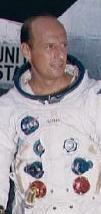
On April 20, 1967, the unmanned lunar lander Surveyor 3 landed near Oceanus Procellarum on the surface of the moon. One of the things aboard was a television camera. Two-and-a-half years later, on November 20, 1969, Apollo 12 astronauts Pete Conrad and Alan L. Bean recovered the camera. When NASA scientists examined it back on Earth they were surprised to find specimens of Streptococcus mitis that were still alive. Because of the precautions the astronauts had taken, NASA determined that the germs were inside the camera when it was retrieved, so they must have been there before the Surveyor 3 was launched. Apparently, these bacteria had survived for 31 months in the vacuum of the moon's atmosphere. Perhaps NASA shouldn't have been surprised, because there are other bacteria that thrive under near-vacuum pressure on the earth today. Anyway, we now know that the vacuum of space is not a fatal problem for bacteria.
What about the low temperature and the possible lack of liquid water in space? The bacteria hiding in the camera recovered from the moon would have suffered huge monthly temperature swings and the complete lack of water. Freezing and drying, in the presence of the right protectants, are actually two ways normal bacteria can enter a state of suspended animation. And interestingly, if the right protectants aren't supplied originally, the bacteria that die first supply them for the benefit of the surviving ones. English microbiologist John Postgate discusses this fact in The Outer Reaches of Life (1994) (2):
"When a population of bacteria dries out without a protectant, many of the cells break open and release their internal contents. Among these contents are proteins, gums and sugars, all of which are protective. If the population is sufficiently dense, so that significant amounts of protectant are released, material released from the majority which died first can protect a few of their surviving fellows."Comparable considerations apply to death from freezing.... Protective substances such as glycerol are well known and widely used; they are called cryoprotectants. Bacteria frozen without such chemicals leak internal contents, among which are many substances that are cryoprotective."
Postgate says that bacteria have apparently survived for 4,800 years in the brickwork of Peruvian pyramids, and maybe even 300 million years in coal, using the drying strategy. He also describes bacteria that apparently survived for 11,000 years in the gut of a well-preserved mastodon, although in this case the colony may have continued to live and multiply using nutrients available in the carcass. Postgate gives several other examples of long-surviving bacteria, and he is careful to mention the possibility that some of the bacterial cultures may have been contaminated, so not all of the reports are necessarily reliable.
Some bacteria have another even more effective survival strategy: they form spores. Spores are bacterial cells in complete dormancy, with thick protective coats. In terms of our computer analogy, a bacterial spore is like a handheld calculator that has repackaged itself into its original protective shipping carton and turned itself off.
"The resistance of some bacterial cells to environmental destruction is impressive. Some bacteria form resistant cells called endospores. The original cell replicates its chromosome, and one copy becomes surrounded by a durable wall. The outer cell disintegrates, but the endospore it contains survives all sorts of trauma, including lack of nutrients and water, extreme heat or cold, and most poisons. Unfortunately, boiling water is not hot enough to kill most endospores in a reasonable length of time.... Endospores may remain dormant for centuries" (3).
Postgate concludes his chapter on spores, entitled "Immortality and the Big Sleep," by saying, "There may be much older spores out there, waiting for energetic microbiologists to revive them." And there were.
 Ancient bee in amber |
Thirty Million-Year Sleep: Germ Is Declared Alive!
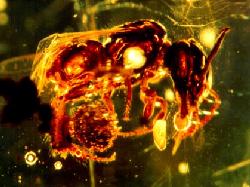
On May 19, 1995, The New York Times carried a front-page story about much older spores (4). Biologists Raul Cano and Monica Borucki extracted bacterial spores from bees preserved in amber in Costa Rica. Amber is tree-sap that hardens and persists as a fossil. This amber had entrapped some bees and hardened between 25 and 40 million years ago. Bacteria living in the bees' digestive tracts recognized a problem and turned themselves into spores. When placed in a suitable culture, millions of years later, the spores came right back to life. As a control, the two biologists also attempted to culture from the same amber a number of samples that contained no bee parts. These cultures were negative, adding credibility to the experiment. This finding was originally reported in the journal Science (5) to general acceptance.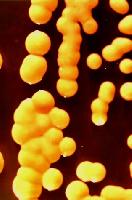 Revived bacteria |
Postgate, upon learning of this discovery, wrote an article for The Times of London that concluded as follows (6):
"... could life on this planet be descended from alien spores? ...Panspermia, the view that the seed of life is diffused throughout the universe, has been favored by a minority of thinkers since the Greek Anaxagoras in the 5th century BC. He, Arrhenius and Fred Hoyle may yet have the laugh on us doubters."
Conclusion
When the first bacteria colonized the earth, almost four billion years ago, it was by our standards a hostile place. There was no free oxygen to breathe and no ozone to block out the sun's damaging ultraviolet radiation. Nuclear radiation came from decaying U235, which was about fifty times more abundant then than now (7). The air was hot and full of noxious chemicals such as sulphurous gases released by volcanoes. Not for nothing is it called the Hadean Eon. However, there are bacteria which can live, even thrive, in a very wide variety of conditions that seem unfriendly to us (8)."Life manages very well without oxygen, evolving into flourishing communities of anaerobes. Acidity... presents no problem, as sulphur bacteria and their co-habitants illustrate, nor does a considerable degree of alkalinity bother alkophiles.... Water purity is a trivial matter: saturated salt brines support abundant bacterial life. And pressure is quite irrelevant, with bacteria growing happily in a near vacuum or at the huge hydrostatic pressure of deep ocean trenches. Temperature, too, presents little problem: boiling hot springs support bacterial life, and bacteria have been found growing at 112 C in superheated geothermal water under hydrostatic pressure; conversely, other types of bacteria thrive at well below zero, provided the water is salty enough not to freeze. And even if they do get frozen, many bacteria revive when their habitat thaws. Even organic food is not a prerequisite...."
There are bacteria that metabolize iron, nitrogen, sulphur, and other inorganic materials. There are bacteria that can live without sunlight. Archaebacteria that can withstand extreme heat have been found thriving in oil reservoirs a mile underground (9). Some species of cyanobacteria are highly resistant to ultraviolet radiation. The only thing absolutely essential for bacteria to live, grow, and multiply is liquid water. We are confident that the early Earth had plenty of water. Scientists believe that concentration of water in the earliest atmosphere for which they have data, over four billion years ago, was far higher than it is today.
Bacteria have the ability to colonize an unfriendly planet like the Hadean Earth. Not just had the ability but have the ability. These are not make believe stories. All of the bacteria we have considered, with all of their unusual abilities to survive extreme environments, are alive today!
Updates
You could take E. coli and rapidly cool it to 10° K and leave it for 10 billion years and then put it back in glucose, and I suspect you would have 99 percent survival — Leslie Orgel (10) 24 Aug 2025: Antarctic bacteria share 'life-support' genes....
 "Extremophile survives the transient pressures associated with impact-induced ejection from Mars," by Lily Zhao et al, PNAS Nexus; and commentary by Robin George Andrews, NYT, 03 Mar 2026.
"Evolutionary bioenergetics of sporulation," by Canan Karakoç et al, PNAS, 06 Feb 2026.
...sporulation is thought to have originated nearly three billion years ago....
"Swansong biospheres: refuges for life and novel microbial biospheres on terrestrial planets near the end of their habitable lifetimes," by Jack T. O'Malley-James et al, [abstract | arXiv] IJA
"...survival of the halotolerant yeast Debaryomyces hansenii in deliquescence-driven brines," by Shivani Nundoo et al, International Journal of Astrobiology, Oct 2025.
19 Sep 2025: Intraterrestrials: Discovering the Strangest Life on Earth, by Karen G. Lloyd [book review].
"Tersicoccus phoenicis (Actinobacteria), a spacecraft clean room isolate, exhibits dormancy," by Tirumalai M, Ali S, Fox GE, Widger W. et al, Microbiol Spectr, 13:e01692-25., 11 Aug 2025.
"Flourishing chemosynthetic life at the greatest depths of hadal trenches," by Peng, X., Du, M., Gebruk, A. et al, Nature, online 30 Jul 2025.
"DPANN archaea," by Wen-Cong Huang and Anja Spang, Current Biology, 18 Aug 2025.
...several phylum-level lineages of putative genome-reduced archaea ...indicating their dependency on symbiotic partners ...have now been shown to be widespread across a variety of environments and may thus play an important role in not only host evolution but also ecology.
31 Mar 2025: ...microscopic algae that had remained dormant for c. 7000 years ...resumed growth....
14 Mar 2025: Life that could live under the ice of Europa or Enceladus?
"Mariana Trench expedition discovers new lifeforms flourishing in deep-sea environment," by Justin Jackson, Phys.Org, 10 Mar 2025.
...at depths exceeding 6,000 meters below sea level, ...Immense hydrostatic pressure, near-freezing temperatures, and extreme nutrient limitations ...create seemingly impossible conditions for life to flourish. ...Findings reveal an unprecedented level of taxonomic novelty, with 89.4% of identified microbial species previously unreported.
"Bacteria Acidithiobacillus ferrooxidans, terrestrial analogue of extraterrestrial microorganisms?" by Slowik GP, Richer R, Stryjska AZ, Dabrowski P., International Journal of Astrobiology, 05 Nov 2024.
"2-billion-year-old rock home to living microbes," UTokyo, 04 Oct 2024; re:
"Subsurface Microbial Colonization at Mineral-Filled Veins in 2-Billion-Year-Old Mafic Rock from the Bushveld Igneous Complex, South Africa," by Yohey Suzuki et al, Microbial Ecology, 02 Oct 2024.
"Bacteria from Paleozoic Salt Deposits" by Heinz Dombrowski, [local pdf], 1963.
"The Mysterious, Deep-Dwelling Microbes That Sculpt Our Planet" by Ferris Jabr, The New York Times, 24 Jun 2024.
The history of life on Earth is the history of life's remaking Earth.
"Aerobic microbial life persists in oxic marine sediment as old as 101.5 million years," doi:10.1038/s41467-020-17330-1, by Y. Morono, M. Ito, T. Hoshino et al., Nat Commun, 28 July 2020.
"Iron Meteorites Can Support the Growth of Acidophilic Chemolithoautotrophic Microorganisms," by Elena Gonzáles-Toril et al., Astrobiology, 2005.
"Bleach does not tackle fatal hospital superbug...," by Nicola Davis, The Guardian, 22 Nov 2023.
03 Nov 2023: Could the ocean on Enceladus contain life?
21 Jul 2023: ...an overlooked oxygen source in subsurface ecosystems of Earth
 The Panspermia Theory, BBC Ideas, The Open University, 07 Feb 2023.
13 Dec 2022: "Directed panspermia" using comets by Chris McKay et al.
"Carnobacterium Species Capable of Growth at Pressures Ranging Over 5 Orders of Magnitude, from the Surface of Mars (10^-3 Pa) to Deep Oceans (10^7 Pa) in the Solar System," by Kathleen M. Miller et al., Astrobiology, 24 Nov 2022.
Effects of Desiccation and Freezing on Microbial Ionizing Radiation Survivability... by William H. Horne et al., Astrobiology, online 25 Oct 2022. Desiccation and freezing greatly increased radiation survival....
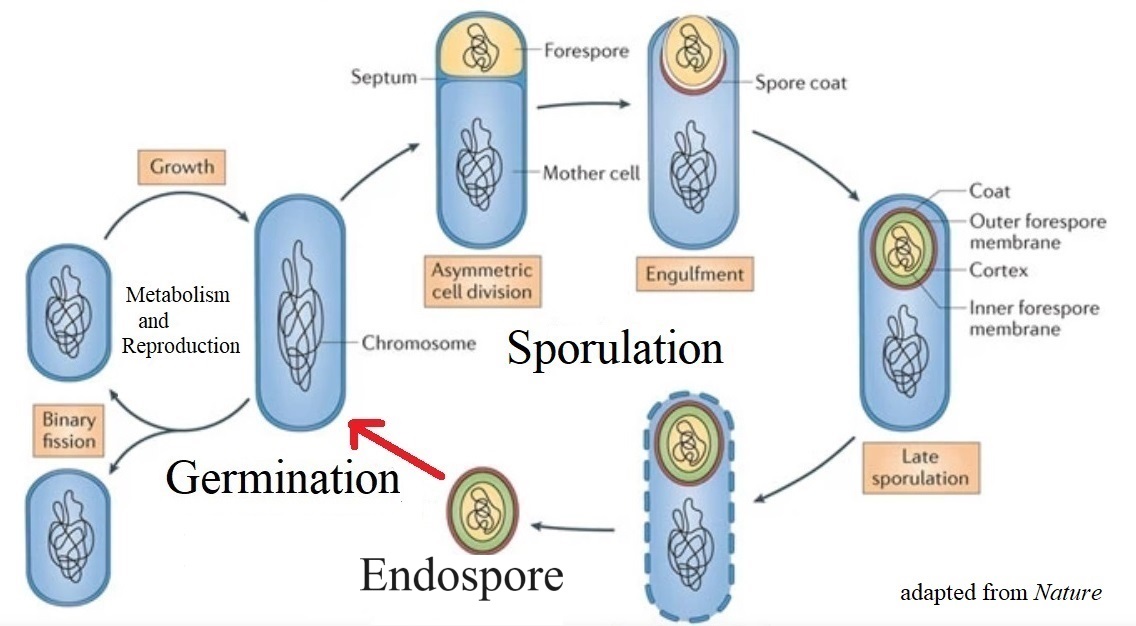 09 Oct 2022: Bacterial spore's membrane acts as a "biological capacitor" (right.)
"Glaciers on the Tibetan Plateau boast a wide diversity of microorganisms, including species found nowhere else." Nature, 27 Jun 2022. ...more than 25 million protein-coding genes....
"The highly diverse Antarctic Peninsula soil microbiota as a source of novel resistance genes" by Andrés E. Marcoleta, Patricio Arros, Macarena A. Varas et al., doi:10.1016/j.scitotenv.2021.152003, Science of The Total Environment, 01 Mar 2022.
"Role of DNA repair pathways in the recovery of a dried, radioresistant cyanobacterium exposed to high-LET radiation: implications for the habitability of Mars" by Claudia Mosca et al., International Journal of Astrobiology, 21 Apr 2022.
"Surviving Mars ...the persistence of facultative anaerobic microbes from analogue sites" by Kristina Beblo-Vranesevic et al., International Journal of Astrobiology, 24 Mar 2022.
"How Do You Search For Life In The Universe? Use Clues From Microbes!" by Michael Hirsch and Jaime Cordova, Science Friday, 04 Nov 2021.
17 Jan 2022: Trace gases could potentially support life.
"A microbe that uses crude oil to make methane" by Guillaume Borrel, Nature, 22 Dec 2021.
"Water Activities of Acid Brine Lakes Approach the Limit for Life", by Kathleen C. Benison et al., Astrobiology, Jun 2021. ...thermodynamic insight into life within end-member natural waters that lie at, or possibly beyond, the very edge of habitable space on Earth.
"Radioactivity May Fuel Life Deep Underground and Inside Other Worlds", by Jordana Cepelewicz, Quanta Magazine, 18 May 2021.
"Inside Deep Undersea Rocks, Life Thrives Without the Sun", by Jordana Cepelewicz, Quanta Magazine, 13 May 2021.
"Revival of Anhydrobiotic Cyanobacterium Biofilms Exposed to Space Vacuum and Prolonged Dryness...," by Claudia Mosca et al., doi:10.1089/ast.2020.2359, Astrobiology, 30 Apr 2021.
04 Dec 2020: ...an extreme and inhospitable environment that nonetheless supports microbial life.
26 Aug 2020: Bacteria survived on the exterior of the International Space Station.
21 Aug 2020: Bacteria living on atmospheric trace gases are found in Anarctica, the Arctic and Tibet.
Aerobic microbial life persists in oxic marine sediment as old as 101.5 million years by Yuki Morono, Steven D'Hondt, Fumio Inagaki et al., doi:10.1038/s41467-020-17330-1, Nature Communications, 28 Jul 2020.
06 May 2020: Bacteria and yeast can thrive on pure Hydrogen.
Deep microbial proliferation at the basalt interface in 33.5-104 million-year-old oceanic crust by Yohey Suzuki et al., doi:10.1038/s42003-020-0860-1, Communications Biology, 02 Apr 2020.
Given the subsurface presence of methane and liquid water on Mars, the communities fueled by organic matter and methane in subseafloor basalt on Earth provide a clear model for extant life and/or biosignatures from past life in the subsurface of Mars and other planets.
Exploring the microbial biotransformation of extraterrestrial material on nanometer scale by Tetyana Milojevic et al., doi:10.1038/s41598-019-54482-7, Sci Rep, 02 Dec 2019. M. sedula was capable of autotrophic growth on stony meteorite NWA 1172, utilizing metals trapped within it as the sole energy source.
First-ever map of Saturn moon makes it a strong candidate for alien life, New York Post, 19 Nov 2019. ...on Earth there is a bacterium that can survive just on acetylene and water.
Europe's largest meteorite crater – home to deep ancient life, Linnaeus University (+PhysOrg.com), 18 Oct 2019.
Microbial Life Discovered 2.4 Km Deep in Canadian Mine, The Scientist, 23 Aug 2019.
12 May 2019: The subsurface biosphere
Arsenic-breathing life discovered in the tropical Pacific Ocean by Hannah Hickey, University of Washington (+Newswise), 01 May 2019; re:
Complete arsenic-based respiratory cycle in the marine microbial communities of pelagic oxygen-deficient zones by Jaclyn K. Saunders et al., doi:10.1073/pnas.1818349116, PNAS, online 26 Apr 2019.
Limits of Life and the Habitability of Mars: The ESA Space Experiment BIOMEX on the ISS by Jean-Pierre de Vera et al., doi:10.1089/ast.2018.1897, Astrobiology, 11 Feb 2019.
Experimental studies addressing the longevity of Bacillus subtilis spores - The first data from a 500-year experiment, by Nikea Ulrich et al., doi:10.1371/journal.pone.0208425, PLoS One, 04 Dec 2018.
Extreme Microbes Found in Crystals Buried 200 Feet Beneath the Sea of Japan by Mindy Weisberger, LiveScience, 17 Jan 2019.
10 Dec 2018: Earth's deep life suggests microbes might inhabit the subsurface of other planets.
Multimicrobial Kombucha Culture Tolerates Mars-Like Conditions Simulated on Low-Earth Orbit by Olga Podolich et al., doi:10.1089/ast.2017.1746, Astrobiology, online 28 Nov 2018.
Description of Tersicoccus phoenicis gen. nov., sp. nov. isolated from spacecraft assembly clean room environments by Parag Vaishampayan,et al., doi:10.1099/ijs.0.047134-0, International Journal of Systematic and Evolutionary Microbiology, 2013. Though the extreme conditions of spacecraft assembly clean rooms are effective in reducing the overall microbial load, certain resistant micro-organisms persist, namely those capable of tolerating desiccation, wide ranges of pH, temperature and salt-concentration and exposure to UV light or hydrogen peroxide.
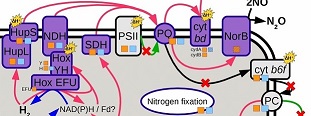
02 Oct 2018: Cyanobacteria thrive in the deep continental subsurface without light or oxygen (right.)
28 Sep 2018: New research makes panspermia more likely.
Colonising the galaxy is hard. Why not send bacteria instead? The Economist, 12 Apr 2018.
Metabolism and Biodegradation of Spacecraft Cleaning Reagents by Strains of Spacecraft-Associated Acinetobacter by Mogul Rakesh et al., Astrobiology, online 19 Apr 2018. It turns out that the bacteria survive by eating the alcohol and floor detergent meant to banish them.
Enhanced Microbial Survivability in Subzero Brines by Heinz Jacob et al., Astrobiology, online 17 Apr 2018.
17 Mar 2018: If Earth's history is any guide, life in our galaxy will be mostly unicellular bacteria....
03 Mar 2018: ...the spacecraft's instruments also detected methane, carbon dioxide, ammonia, molecular nitrogen and molecular hydrogen....
Colonising the galaxy is hard. Why not send bacteria instead? The Economist, 12 Apr 2018.
19 Dec 2017: ...ancient Archea, millions of years old....
Scientists Identify Key Factors That Help Microbes Thrive In Harsh Environments: Discovery Helps Scientists Understand How Life May Survive on Other Planets, University of Maryland Medical Center/School of Medicine via Newswise, 22 Nov 2017.
18 Nov 2017: ...long-term preservation of microbial life inside Martian permafrost is possible.
Genomic exploration of the diversity, ecology, and evolution of the archaeal domain of life by Anja Spang, Eva F. Caceres, Thijs J. G. Ettema, doi:10.1126/science.aaf3, Science, 11 Aug 2017.
29 May 2017: Microrganisms on ISS?
Microbes might thrive after crash-landing on board a meteorite by Rebecca Boyle, New Scientist, 17 May 2017.
Subduction zone forearc serpentinites as incubators for deep microbial life, by Oliver Plümper et al., doi:10.1073/pnas.1612147114, PNAS, online 10 Apr 2017. ...we estimate that life could exist as deep as ~10,000 m below the seafloor.
02 Mar 2017: ...at least one methanogen could survive in the deep subsurface environment of Mars.
Naica's crystal caves hold long-dormant life by Jonathan Amos, BBC, 18 Feb 2017.
New Bacteria Groups, and Stunning Diversity, Discovered Underground, Lawrence Berkeley National Laboratory, re:
Thousands of microbial genomes shed light on interconnected biogeochemical processes in an aquifer system by Karthik Anantharaman et al., doi:10.1038/ncomms13219, Nature Communications, 24 Oct 2016.
Iron-Loving Bacteria a Model For Mars Life by Elizabeth Howell, Astrobiology, 24 Oct 2016.
Sulfur mass-independent fractionation in subsurface fracture waters indicates a long-standing sulfur cycle in Precambrian rocks by Long Li et al., doi:10.1038/ncomms13252, Nature Communications, 31 Oct 2016; & commentary: Ancient water from Northern Ontario mine may harbour 'alien' life, by Ivan Semeniuk, The Globe and Mail, 27 Oct 2016.
Microbial metabolisms in a 2.5-km-deep ecosystem created by hydraulic fracturing in shales by Rebecca A. Daly et al., doi:10.1038/nmicrobiol.2016.146, Nature Microbiology, Oct 2016; & commentary: Deep down fracking wells, microbial communities thrive by Tom Rickey, PNNL (+Newswise), 24 Oct 2016; & New genus of bacteria found living inside hydraulic fracturing wells by Pam Frost Gorder, Ohio State University (+Newswise), 05 Sep 2016.
Alien life could feed on cosmic rays by Jessica Boddy, doi:10.1126/science.aal0237, Science, 07 Oct 2016.
On the possibility of galactic cosmic ray-induced radiolysis-powered life in subsurface environments in the Universe by Dimitra Atri, doi:10.1098/rsif.2016.0459, the Royal Society, accepted 05 Sep 2016.
Visions of Life on Mars in Earth's Depths by Kenneth Chang, The New York Times, 12 Sep 2016.
30 Jul 2016: The Washington Post discusses searching for life on Mars.
27 Jun 2016: The way we've looked for life [beyond Earth], or are planning to look, is pathetic. ...Millions of microbes are yet to be discovered.
Twenty-Three Species of Hypobarophilic Bacteria Recovered from Diverse Ecosystems Exhibit Growth under Simulated Martian Conditions at 0.7 kPa by Andrew C. Schuerger and Wayne L. Nicholson, doi:10.1089/ast.2015.1394, Astrobiology, 13 May 2016.
Scaling laws predict global microbial diversity by Kenneth J. Loceya and Jay T. Lennon, doi:10.1073/pnas.1521291113, PNAS, online 2 May 2016. ...We predict that Earth is home to as many as 1 trillion (10^12) microbial species.
Metagenomic analyses of the autotrophic Fe(II)-oxidizing, nitrate-reducing enrichment Culture KS by Shaomei He et al., doi:10.1128/AEM.03493-15, AEM, online 19 Feb 2016; and commentary: In These Microbes, Iron Works Like Oxygen, Newswise, 15 Apr 2016.
10 Apr 2016: Diverse microbial life thrives in aquifers under the deep ocean floor.
Nearing the limits of life on Earth, McGill University (+Newswise), 19 Jan 2016.
The Survival and Resistance of Halobacterium salinarum NRC-1, Halococcus hamelinensis, and Halococcus morrhuae to Simulated Outer Space Solar Radiation by Leuko S., Domingos C., Parpart A., Reitz G., and Rettberg P., doi:10.1089/ast.2015.1310, Astrobiology, 5 Nov 2015.
Suspended animation by Alex Riley, Aeon, 15 Oct 2015.
23 Jul 2015: ...Microbial communities ...at ~1.5 to 2.5 km below the seafloor....
19 Jul 2015: Microorganisms within meteorites could survive hypervelocity entry from space....
The last place on Earth without life by Rachel Nuwer, BBC.com, 3 Mar 2014.
17 Jun 2015: I am very puzzled as to why this major scientific question has been allowed to sit idle, unattended, for four decades — Gil Levin
Earth microbe prefers living on meteorites by Christina Reed, Science, 16 Apr 2015.
Jeffrey Marlow and Jan Amend, "The Energy of Life" [html], The Scientist, 1 Feb 2015.
Melanie R. Mormile, "Going from microbial ecology to genome data and back: studies on a haloalkaliphilic bacterium isolated from Soap Lake, Washington State" [abstract], doi:10.3389/fmicb.2014.00628, Frontiers in Microbiology, 19 Nov 2014; and commentary:
...Hydrogen production in extreme bacterium, Missouri University of Science and Technology (+Newswise), 30 Jan 2015.
Hannah Hoag, "Earth's deep crust could support widespread life" [html], doi:10.1038/nature.2014.16575, Nature, 17 Dec 2014.
Brent C. Christner, John C. Priscu et al., "A microbial ecosystem beneath the West Antarctic ice sheet" [html], doi:10.1038/nature13667, p 310-313 ...and commentaries:
Douglas Fox, "Lakes under the ice: Antarctica's secret garden" [html], doi:10.1038/512244a, p 244-246 ...and
Martyn Tranter, "...Microbes eat rock under ice" [html], doi:10.1038/512256a, p 256-257 v 512, Nature, 21 Aug 2014.
Meet the electric life forms that live on pure energy by Catherine Brahic, p 8-9 n 2978, New Scientist, 16 Jul 2014.
Elizabeth Pennisi, "Searching for life in the deep shale" [abstract], doi:10.1126/science.344.6191.1470, p 1470-1471 v 344, Science, 27 Jun 2014.
"Mouser and Sharma suspect microbes are thriving in the brine that fills the shale's pores...."
Microbial stowaways to Mars identified by Jyoti Madhusoodanan, doi:10.1038/nature.2014.15249, Nature News, 19 May 2014.
20 May 2014: ...Methanogens could potentially inhabit the subsurface of Mars.
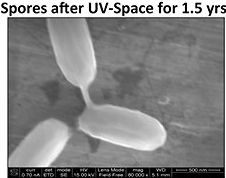 4 May 2014: Bacteria can survive long exposure to the cold, vacuum and radiation of space (right.)
Cataloguing OtherWorldly Landscapes on Earth, European Space Agency (+Astrobiology Magazine), 17 Oct 2013.
11 Oct 2013: DNA repair mechanisms could allow life to persist on icy worlds. Anders Brahme comments.
Satoshi Akanuma et al., "Experimental evidence for the thermophilicity of ancestral life" [abstract], doi:10.1073/pnas.1308215110, Proc. Natl. Acad. Sci. USA, online 17 Jun 2013.
Bacterium from Canadian High Arctic and life on Mars, McGill University (+ScienceDaily), 22 May 2013.
Atlantic Research Expedition Uncovers Vast Methane-Based Ecosystem, University of North Carolina Wilmington via Newswise, 22 May 2013.
18 Apr 2013: Earth was seeded by panspermia. (Points to an article that discusses hardy bacteria.)
Supernova left its mark in ancient bacteria by Alexandra Witze, Nature News, 15 Apr 2013.
Karen G. Lloyd et al., "Predominant archaea in marine sediments degrade detrital proteins" [abstract], doi:10.1038/nature12033, p215-218 v496...; and commentary: David L. Valentine, "Microbiology: Intraterrestrial lifestyles" [abstract], doi:10.1038/nature12088, p176-177 v496, Nature, 11 Apr 2013.
Ronnie N. Glud et al., "High rates of microbial carbon turnover in sediments in the deepest oceanic trench on Earth" [abstract], doi:10.1038/ngeo1773, Nature Geoscience, online 17 Mar 2013.
Mark A. Lever et al., "Evidence for Microbial Carbon and Sulfur Cycling in Deeply Buried Ridge Flank Basalt" [abstract], doi:10.1126/science.1229240, p1305-1308 v339, Science, 15 Mar 2013; and commentary: Microbes Likely Abundant Hundreds of Meters Below Sea Floor by Sid Perkins, ScienceNOW, 14 Mar 2013.
5 Mar 2013: Deep below ground some microbes may "live without dividing for millions to tens of millions of years."
Microbes Survive, and Maybe Thrive, High in the Atmosphere by Lizzie Wade, ScienceNOW, 28 Jan 2013.
27 Nov 2012: Life does fine in sub-zero brine locked under ice for millenia.
Scientists Define New Limits of Microbial Life in Undersea Volcanoes, Press Release 12-147, National Science Foundation, 6 Aug 2012.
Georgeta N. Basturea et al., "Growth of a Bacterium that Apparently Uses Arsenic Instead of Phosphorus is a Consequence of Massive Ribosome Breakdown" [abstract], doi:10.1074/jbc.C112.394403, The Journal of Biological Chemistry, online 13 Jul 2012; and commentary: Recycling at root of arsenic 'life', doi:10.1038/487408d, p408 v487, Nature, 26 Jul 2012.
14 Jul 2012: Arsenic-loving bacterium needs phosphorus after all.
24 Jun 2012: ESA's research on the International Space Station is giving credibility to theories that life came from outer space....
Ryan C Lynch et al., "The potential for microbial life in the highest elevation (>6000 m.a.s.l.) mineral soils of the Atacama region" [abstract], doi:10.1029/2012JG001961, J. Geophys. Res.; and commentary: AGU: Unique microbes found in extreme environment, EurekAlert, 8 Jun 2012.
20 May 2012: Viable aerobic bacteria have been recovered in seafloor sediment buried 86 million years ago.
J.D. Crisler, T.M. Newville, F. Chen, B.C. Clark, and M.A. Schneegurt, "Bacterial Growth at the High Concentrations of Magnesium Sulfate Found in Martian Soils" [abstract], doi:10.1089/ast.2011.0720, p98-106 v12, Astrobiology, Feb 2012.
Hardy bacteria help make case for life in the extreme by Matt Swayne, EurekAlert!, 19 Jan 2012.
Scientists Look to Microbes to Unlock Earth's Deep Secrets, Press Release 12-004, National Science Foundation, 9 Jan 2012.
Extremophile survives simulated space travel, USA Today, 30 Sep 2011.
Unknown ocean bacteria create entirely new theories, EurekAlert, 16 Sep 2011. "The loss of genes means that the bacteria can more readily exchange genes with each other, and beneficial genes can then spread rapidly in the oceans...."
Microbes travel through the air; it would be good to know how and where by Lynn Nystrom, Virginia Tech College of Engineering, 9 Sep 2011.
24 May 2011: "...Genetically, we're one-hundredth human," says biologist Jocelyne DiRuggiero.
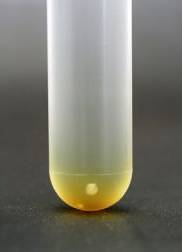 26 Apr 2011: Bacteria can grow at 400,000 Gs, according to a team at JAMSTEC (right).
Antarctic microbes live life to the extreme, doi:10.1038/news.2011.207, by Patricio Segura Ortiz, NatureNews, 4 Apr 2011.
Mutant Microbes Test Radiation Resistance by Jeremy Hsu, Astrobiology Magazine, 24 Mar 2011.
Bacteria back from the brink, Earth Magazine, 7 Mar 2011. "Thousand- and million-year-old microbes found living in salt crystals: Could they also exist on other planets?"
Salt-loving microbe forges its own path, doi:10.1038/news.2011.36, by Tiffany O'Callaghan, NatureNews, 20 Jan 2011. "The diversity of life is bigger than we know now."
24 Dec 2010: ...What level of substitution, we're not sure — Felisa Wolfe-Simon.
...Details of microbe's extraordinary maintenance and repair system, The University of Bristol, 10 Dec 2010. "...Different proteins take responsibility for spotting damage in different situations...."
8 Dec 2010: It's a great story about adaptation, but it's not ET.
2 Dec 2010: Some bacteria can substitute arsenic for phosphorus.
22 Nov 2010: More microbes are found surviving beyond 100,000 years.
Microbe carries minimalism to extremes, by Amy Maxmen, NatureNews, 15 Sep 2010. "It is the first microbe found to survive on the meagre energy provided by a very simple respiratory pathway: the conversion of formate (HCOO–) and water into hydrogen and bicarbonate."
Daly MJ, Gaidamakova EK, Matrosova VY, Kiang JG, Fukumoto R, et al., "Small-Molecule Antioxidant Proteome-Shields in Deinococcus radiodurans," PLoS ONE 5(9): e12570. doi:10.1371/journal.pone.0012570 [abstract], 3 Sep 2010.
24 Aug 2010: Bacteria similar to Gloeocapsa cyanobacteria survived 553 days' exposure to space.
Norman R. Pace, "Giving Microbes Their Due" (review of March of the Microbes: Sighting the Unseen by John L. Ingraham, Cambridge, MA: Harvard University Press, ISBN 978-0-674-03582-9), [html], PLoS Biol 8(7): e1000425, online 20 Jul 2010.
19 Jul 2010: Such high survival rates reinforce the possibility of an interplanetary transfer of viable microbes.
Jason W. Sahl et al., "Novel Microbial Diversity Retrieved by Autonomous Robotic Exploration of the World's Deepest Vertical Phreatic Sinkhole" [abstract], doi:10.1089/ast.2009.0378, p201-213 v10, Astrobiology, Mar 2010.
Karen Olsson-Francis et al., "Isolation of Novel Extreme-Tolerant Cyanobacteria from a Rock-Dwelling Microbial Community by Using Exposure to Low Earth Orbit" [abstract], doi:10.1128/AEM.02547-09, p2115-2121 v76, Applied and Environmental Microbiology, Apr (online 12 Feb) 2010.
Frostbite? Not for These Microbes, by Sarah Reed, ScienceNow, 19 Apr 2010.
Kon-Tiki, Bacteria Style, by Phil Berardelli, ScienceNow, 7 May 2010.
24 Apr 2010: ...We have to keep an open mind about where life might be found in the universe.
Hostile volcanic lake teems with life, by Ana Belluscio, doi:10.1038/news.2010.161, NatureNews, 2 Apr 2010.
Amanda Leigh Mascarelli, "Methane-eating microbes make their own oxygen" [html], doi:10.1038/news.2010.146, NatureNews, online 24 Mar 2010.
Dormant microbes promote diversity, serve environment, Michigan State University, 19 Mar 2010.
5 Mar 2010: Genes in the microbes in our guts are 150 times more numerous than human genes.
Giuseppe Gallettaa et al., "Bacterial survival in Martian conditions" [abstract], arXiv:1002.4077v1, 22 Feb 2010. Also see commentary: Life on Mars, if it exists, is below the surface, SciTechStory, 4 Mar 2010.
Dianne K. Newman, "Feasting on Minerals" [summary], doi:10.1126/science.1184229, p793-794 v327, Science, 12 Feb 2010.
Cox MM, Keck JL, Battista JR, "Rising from the Ashes: DNA Repair in Deinococcus radiodurans" [html], doi:10.1371/journal.pgen.1000815, 6(1): e1000815, PLoS Genet, online 15 Jan 2010.
Microbe understudies await their turn in the limelight by Sandra Hines, University of Washington, 11 Jan 2010.
Microbes survive 30,000 years inside a salt crystal by Bob Holmes, New Scientist, 22 Dec 2009.
12 Nov 2009: In this form the bacteria can survive for hundreds, perhaps millions, of years in a dormant state....
Bacteria 'Invest' Wisely to Survive Uncertain Times, UT Southwestern Medical Center, 1 Nov 2009. "Within the bacteria population, these genetic circuits generate so much diversity that the population as a whole is more tolerant of – and is more likely to survive – a wide range of variability in the environment."
Casey Hubert et al., "A Constant Flux of Diverse Thermophilic Bacteria into the Cold Arctic Seabed" [abstract], doi:10.1126/science.1174012, p1541-1544 v325, Science, 18 Sep 2009. "Microorganisms have been repeatedly discovered in environments that do not support their metabolic activity."
9 Oct 2009: These bacteria could survive on another planet.
12 Jul 2009: Phobus-Grunt will fly specimens of Earthly life to Mars and back.
Steven D'Hondt et al., "Subseafloor sedimentary life in the South Pacific Gyre" [abstract], doi:10.1073/pnas.0811793106, Proc. Natl. Acad. Sci. USA, online 26 Jun 2009.
20 Jun 2009: ...Some microbes thrive at ...10 times the salinity of seawater.
15 Jun 2009: A novel bacterium ...may hold clues as to what life forms might exist on other planets.
10 Jun 2009: ...Metabolically active microbes were reported in 111-million-year-old sediments buried as deep as 1.6 kilometres below the seabed.
17 Apr 2009: Microbial life trapped in darkness under ice accounts for the "Blood Falls" at the snout of Taylor Glacier in Antarctica.
Peter H. Janssen, "Dormant microbes: scouting ahead or plodding along?" [html], doi:10.1038/458831a, p 831 v 458, Nature, 16 Apr 2009.
Christophe Fraser et al., "The Bacterial Species Challenge: Making Sense of Genetic and Ecological Diversity" [html], doi:10.1126/science.1159388, p 741-746 v 323, Science, 6 Feb 2009.
3 Mar 2009: For microbes, it appears that almost all of their major evolution took place before we have any record of them.....
C.L. Greenblatt et al., "Diversity of Microorganisms Isolated from Amber" [pubmed abstract], doi:10.1007/s002489900153, p 58-68 v 38, Microbial Ecology, 1999.
TypesOfBacteria, "a complete information resource about bacteria," website from the UK.
Do Deep-Sea Microbes Studied By UMass Researcher Offer A Glimpse Of What Alien Life Could Be Like On A Jupiter Moon?, University of Massachusetts Amherst, 23 Dec 2008.
New life beneath sea and ice, European Science Foundation, 14 Nov 2008.
Elena V. Pikuta, Richard B. Hoover and Jane Tang, "Microbial Extremophiles at the Limits of Life" [abstract], doi:10.1080/10408410701451948, n 3 v 3, Critical Reviews in Microbiology, online 11 Oct 2008.
90 billion tons of microbial organisms live in the deep biosphere, EurekAlert!, 20 Jul 2008.
4 Jun 2008: Prokaryotic life in Earth's deep dark ocean....
Heidi Ledford, "Microbes thrive more than a kilometre beneath the sea floor" [html], doi:10.1038/news.2008.850, Nature, online 22 May 2008.
Gautam Dantas et al., "Bacteria Subsisting on Antibiotics" [abstract], doi:10.1126/science.1155157, p 100-103 v 320, Science, 4 Apr 2008.
Jennifer E. Mendell et al., "Extreme polyploidy in a large bacterium" [abstract], doi:10.1073/pnas.0707522105, Proc. Natl. Acad. Sci. USA, online 29 Apr 2008.
Brent C. Christner et al., "Ubiquity of Biological Ice Nucleators in Snowfall" [text], p 1214 v 319, Science, 29 Feb 2008.
LSU scientist finds evidence of 'rain-making' bacteria, EurekAlert!, 28 Feb 2008.
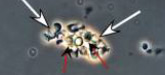 27 Feb 2008: The hypothesis that life in rock could have been transferred between planets... is plausible (right.)
Olivia Judson, "When Life Goes Cloudy" [html], The New York Times, 19 Feb 2008. "...The cloudy residents are bacteria of various kinds."
Ewen Callaway, "Bacteria's New Bones" [html], p 124-126 v 451, Nature, 10 Jan 2008. "Bacteria are now revealing a multitude of elegant internal structures."
26 Dec 2007: Do thawing glaciers speed up evolution?
12 Dec 2007: Shuttle experiment to study effects of space on bacterial spores.
Julie A. Huber et al., "Microbial Population Structures in the Deep Marine Biosphere" [abstract], 10.1126/science.1146689, p 97-100 v 318, Science, 5 Oct 2007. "Our results suggest that even the largest of published metagenomic investigations inadequately represent the full extent of microbial diversity...."
Nicolas Walter, ed., Investigating Life in Extreme Environments [60-page PDF], report issued following European workshops held Nov 2005 and Mar 2006.
 Zero Gravity and Radiation Produce Powerful Microbes is the subject of a reply from Ken Jopp, 7 Oct 2007.
Makarova KS, Omelchenko MV, Gaidamakova EK, Matrosova VY, Vasilenko A, et al., "Deinococcus geothermalis: The Pool of Extreme Radiation Resistance Genes Shrinks" [html], doi:10.1371/journal.pone.0000955, e955, PLoS ONE, Sep 2007.
The world's oldest bacteria, EurekAlert!, 27 Aug 2007. "Our project is about eg. examining how bacteria can live after having been frozen down for millions of years."
23 May 2007: ...Ionizing radiation significantly enhances the growth of fungi that contain melanin.
10 May 2007: E.O. Wilson thinks panspermia is likely.
7 May 2007: ...Durability could enable haloarchaea to survive the period of deep-space travel between planets, perhaps encased in salt crystals.... — Shiladitya DasSarma
Michael J. McInerney et al., "The genome of Syntrophus aciditrophicus: Life at the thermodynamic limit of microbial growth" [abstract], 10.1073/pnas.0610456104, Proc. Natl. Acad. Sci. USA, online 18 Apr 2007.
4 Apr 2007: How did life on Earth originate?
Conan the Bacterium, by Krista Zala, ScienceNOW Daily News, 20 Mar 2007. "...Metal can increase the ability of the enzymes to fix broken chromosomes..."
Heidi Ledford, "Microbes reveal extent of biodiversity" [text], 10.1038/446240a, Nature, online 13 Mar 2007. "...The rate of discovery stayed more or less the same as the number of new sequences grew, suggesting that the number of new protein families will continue to increase."
22 Jan 2007: ...The bacteria and newfound Archaea ...could exist on other planets, such as in the iron- and sulfur-rich soil of Mars. — Jill Banfield
8 Jan 2007: The findings by the Viking experiments are reinterpreted.
21 Dec 2006: We humans are embedded in a microbial world that we barely acknowledge.
Study Finds the Air Rich with Bacteria, by Dan Krotz, Berkeley Lab, 18 Dec 2006.
Alexander R. Schmidt, "A microworld in Triassic amber" [abstract], 10.1038/444835a, p 835 v 444, Nature, 14 Dec 2006. "...220-million-year-old droplets of amber containing bacteria, fungi, algae and protozoans that are assignable to extant genera."
Deep sea yields record-breaking bug by Emma Marris, doi:10.1038/news061211-16, NatureNews, 14 Dec 2006.
Extreme Life, Marine Style, Highlights 2006 Ocean Census, TerraDaily.com, 13 Dec 2006. "...An astonishing community of marine life shrouded beneath 700 meters of ice - 200 km from open water...."
Professional Fasters Deep Under the Sea Floor, Max Planck Society, 5 Dec 2006. "...an alternative source of energy for life deep under large sections of the Pacific - natural radioactivity.... An exotic habitat like this could also have developed on other planets, far away from any suns."
Extreme seabed-survival boosts hope of aliens, by Rob Edwards, NewScientist.com, 28 Aug 2006. "Japanese and German researchers have found billions of bacteria and other tiny organisms living in a layer of sediment which traps the CO2 under the seabed. Their survival in such a hostile natural environment suggests that something similar could be happening on other planets."
21 Oct 2006: Bacteria deep underground subsist on radioactivity.
28 Sep 2006: Because Deinococcus can survive death....
26 Sep 2006: What [rhodopsin] is doing in so many bacteria is not known....
23 Aug 2006: ...They hold a reserve of genetic information that could help them survive, or even become dominant, if environmental conditions change. — from the Marine Biological Laboratory
William Martin and Eugene V. Koonin, "A positive definition of prokaryotes" [text], p 868 v 442, Nature, 24 Aug 2006.
Effect of Spaceflight on Microbial Gene Expression and Virulence, NASA, 23 Aug 2006.
The Last Time It Rained, by Henry Bortman, Astrobiology Magazine, 23 Jun 2006. "...Where rainfall ...occurs once a decade, microbial life can eke out an existence."
Richard A. Kerr, "Life Slow Enough to Live on Radioactivity" [summary], p 179 v 312, Science, 14 Apr 2006.
Ecosystem in Suspended Animation?, Astrobiology Magazine, 28 Feb 2006. "Deeply buried ocean sediments may house populations of tiny organisms that have extremely low maintenance energy needs and population turnover rates of anywhere from 200 to 2,000 years...."
More than a Grain of Salt?..., Newswise.com, 17 Feb 2006. "...They might have a better idea of what to look for on Mars."
30 Jan 2006: More survivors of the Columbia disintegration have been found by biologists at Texas State University.
Clues on Extraterrestrials? Check Your Stomach, by Robert C. Cowen, The Christian Science Monitor, 14 Jan 2006.
5 Dec 2005: Microbes can hunker down....
9 Nov 2005: Lichens survive in space aboard ESA's Foton M-2 mission.
E. Domack et al., "A chemotrophic ecosystem found beneath Antarctic ice shelf" [pdf], p 269-272 v 86, Eos, 19 Jul 2005. Press release: Antarctic Ecosystem Discovered, by Vige Barrie, Hamilton College, 18 Jul 2005.
21 July 2005: Rocco Mancinelli studies Earth's extremophiles.
Glennda Chiu, "Researchers discover arsenic-based ecosystem" [abstract], The Kansas City Star, 1 Jul 2005.
Bacteria able to carry out photosynthesis in ocean depths, by Skip Derra, Arizona State University, 20 Jun 2005.
Expect Life to be Cold, by Mitch Sogin, Astrobiology Magazine, 18 May 2005.
Traces Of Stowaway Earth Algae Could Survive On Mars, University Of Florida, 17 May 2005.
Microbes, Microbes Everywhere, by Mitch Sogin, Astrobiology Magazine, 16 May 2005.
Cindy L. Satterfield et al., "New evidence for 250 Ma age of halotolerant bacterium from a Permian salt crystal" [abstract], p 265-268 v 33 n 4, Geology, Apr 2005: "These results support the 250 Ma age of the fluid inclusions, and by inference, the long-term survivability of microorganisms such as Virgibacillus sp."
24 Feb 2005: Bacteria frozen for 30,000 years revived as soon as they thawed, according to Richard Hoover....
Axel Schippers et al., "Prokaryotic cells of the deep sub-seafloor biosphere identified as living bacteria" [text], p 861-864 v 433, Nature, 24 Feb 2005. Commentary at: Bacteria thrive at stunning depths, by Roxanne Khamsi, news@nature.com, 23 Feb 2005; and Ancient life thrives in the deep, BBCNews, 23 Feb 2005.
Microbes survive deep permafrost, by Becky McCall, BBCNews, 23 Feb 2005.
Wild Things: The Most Extreme Creatures, by Bjorn Carey, LiveScience, 7 Feb 2005.
Organisms Found in Deepest Part of Ocean, by Randolph E. Schmid, AP, posted by TimesLeader.com, 4 Feb 2005.
1 Jan 2005: Gene exchange among archaebacteria from salt pools in Spain.
14 Dec 2004: Microbes survived a short trip in space.
22 Nov 2004: Apollo 12 landed on the moon 35 years ago.
22 Oct 2004: Fungi from deep sea sediments revive.
14 Sep 2004: Halobacteria can repair badly damaged DNA.
Philip Ball, "Alien microbes could survive crash-landing" [text], Nature, 02 Sep 2004.
Mini-Microbes Redefine Extreme Living, by Robert Roy Britt, Space.com, 26 May 2004.
D. rad Bacteria: Candidate Astronauts, Astronomy Picture of the Day, 25 Apr 2004.
19 Apr 2004: Mars may have life today (The New York Times).
Experiment onboard ISS to find out how bugs behave in orbit, by Tony Phillips, Science@NASA, 23 Feb 2004.
Philip Ball, "Astrobiology: Water, water, everywhere?" [text], p 19-20 v 427, Nature, 1 Jan 2004: "There seems to be no simple molecule that can mimic all of the useful biological functions of water."
Bacteria Discovered in 4,000 Feet of Rock Fuels Mars Comparison, by Mark Floyd, Oregon State University, 29 Dec 2003.
The Goldilocks Zone: bigger than we thought, by Ron Koczor and Tony Phillips, Science@NASA, 2 Oct 2003.
2003, September 15: Galileo will crash into Jupiter [to avoid contaminating Europa].
Kazem Kashefi and Derek R. Lovley, "Extending the Upper Temperature Limit for Life," p 934 v 301, Science, 15 Aug 2003: "Cultures incubated for up to 2 hours at 130°C still grew when transferred to fresh medium at 103°C."
Jonathan Knight, "Discovery changes view of bacteria," p 909 v 423, Nature, 26 June 2003: "Bacteria have specialized compartments that were previously thought to exist only in higher organisms."
Hitchhikers May Have Thumbed A Ride to Mars, by Leslie Mullen, Astrobiology Magazine, 9 Apr 2003; based on "Potassium Ferrate [Fe(VI)] does not mediate self-sterilization of a surrogate Martian soil" [abstract], by Ronald L. Crawford et al., in BMC Microbiology, 6 March 2003.
15-foot hypodermic needles provide evidence for vast oceanic crustal biosphere, EurekAlert!, 18 Mar 2003.
New life discovered in deep ocean floor, EurekAlert!, 14 Feb 2003.
Bugs from the deep may be window into the origins of life — on earth and beyond, EurekAlert!, 14 Feb 2003.
2003, January 10: How a hardy bacterium resists radiation....
2003, January 9: Microbes in ancient ocean crust....
2002, December 20: Radioactivity and water will support bacteria.
2002, November 25: Bacteria could survive interplanetary travel.
2002, November 7: "The universe is full of microbes."
2002, November 4: Bacteria can survive high-speed impacts.
Life In The Rocks, SpaceDaily, 22 Feb 2002.
Rock-Eating Microbes Survive In Deep Ocean Off Peru, ScienceDaily, 22 Feb 2002.
2002, Feb 22: Common microbes survive pressure of 16,000 atmospheres.
2002, January 16: Methanogenic archaea thrive on inorganic rock 200 meters deep....
 2002, January 9: Bacteria sent into space survive (Gerda Horneck, right.)
Researchers Find Glass-Eating Microbes at the Rock Bottom of the Food Chain, Scripps News, 27 Sep 2001.
Microbes in rocks and meteorites: a new form of life unaffected by time, temperature, pressure [preprint] by Giuseppe Geraci, Rosanna del Gaudio and Bruno D'Argenio, Rendiconti Accademia Nazionale dei Lincei, s. 9 (Mat.) vol. 12, 51-64, 2001.
2001, May 15: A web article about earthly contamination of samples from space....
New Group of Microorganisms Discovered in the Open Sea, NSF PR 01-05, National Science Foundation, 24 January 2001.
Microscopic Stowaways on the ISS, by Patrick L. Barry, Science@NASA, 26 November 2000.
Wherever you look, there's life, by Joanna Marchant, New Scientist, 11 November 2000.
2000, October 19: 250 Million-year-old bacteria have been revived.
Bacteria Aboard Mir Space Station Harmless, SpaceDaily.com, 12 October 2000. "Similar bacteria ...can already be observed in the 'Zarya' cargo unit of the International Space Station, which has been in space for nearly two years."
Mark Schrope, "They're alive," p 15 v 167, New Scientist, 12 August 2000: "Bacteria flourish in the dark cold conditions under glaciers."
2000, August 8: Indestructable germs put to use!
2000, August 6: Germs survive in space.
2000, July 7: Bacteria at the South Pole.
New Find Proves Life Can Thrive in Hostile Conditions, by Stewart Taggart, Space.com, 18 May 2000.
A Mid-summer's Microbe Hunt, by Gilbert Knier, NASA Science News, 3 May 2000. "A team of explorers including astrobiologist Richard Hoover and astronauts Jim Lovell and Owen Garriott traveled to Antarctica in January 2000 to search for extreme-loving microbes."
Reports of "weird life" almost stranger than fiction, by Annette Trinity-Stevens, Montana State University, 30 March 2000.
Elizabeth Pennisi, "Going Deep for an Unearthly Microbe" [summary], p 1580-1583 v 287, Science, 3 March 2000. Microbiologists have recovered a cunning new microbe from the scalding fluid ejected during a submarine eruption. Saganella is "absolutely remarkable" and is a potential model for extraterrestrial life. "If an organism can do this on Earth, there's no telling what it could be doing someplace else."
2000, January 12: ...Bacteria that might have been able to survive a trip from Mars.
1999, December 14: Meet Conan the Bacterium.
1999, December 10: Microbes living deep in million-year-old ice in Antarctica.
The Invisible Emperors: Microbes, not man, are the real powers on Earth, by Charles W. Petit and Laura Tangley, U.S.News online, 8 November, 1999.
1999, October 7: More microbes survive in space.
Great bugs of fire: Protein from volcano-loving bug crystallized in space by David Noever, NASA Space Science News, 16 September 1998.
Earth microbes on the moon by David Noever, NASA Space Science News, 1 September 1998.
1999, August 24: DNA protection by biocrystallization may be crucial and widespread in prokaryotes.
1998, June 26: Microbial life discovered two meters below permanent ice in Antarctica.
1998, March 13: Two scientists exploring a microworld locked in ancient ice have found a wide range of lifeforms....
Deep Dwellers: Microbes thrives far below ground by Richard Monastersky. ScienceNewsOnline, 29 March 1997.
1997, December 13: A portion of the SPIE 1998 annual meeting will be devoted to investigations of terrestrial extremophiles.
References
1. Surveyor Crater and Surveyor III, NASA's annotated Apollo Lunar Surface Journal. (Search for "little bacteria".)2. John Postgate, The Outer Reaches of Life, Cambridge University Press, 1994. p 228.
3. Neil A. Campbell, Biology, 3rd edition. The Benjamin/Cummings Publishing Company, Inc., 1993. p 520.
4. Malcolm W. Browne, "30 Million-Year Sleep: Germ Is Declared Alive," p A1,A20, The New York Times, 19 May 1995.
5. Raul J. Cano and Monica K. Borucki, "Revival and Identification of Bacterial Spores in 25- to 40-Million-Year-Old Dominican Amber" [abstract], p 1060-1064 v 268, Science, 19 May 1995.
6. John Postgate, "Does this bee contain the secret of life?" p 14a, The Times (London), 29 May 1995.
7. James E. Lovelock, The Ages of Gaia. W.W. Norton and Company, 1988. p 123.
8. John Postgate, The Outer Reaches of Life, Cambridge University Press, 1994. p 251.
9. S. L'Haridon et al., "Hot subterranean biosphere in a continental oil reservoir," p 223-224 v 377, Nature, 21 September 1995.
10. Leslie Orgel, [quoted in] Here Be Dragons, by David Koerner and Simon LeVay, Oxford University Press, 2000. p 32-33. [our review]
Related Reading
Michael H. Carr, "Implications for Life," p 170-183, Water on Mars, Oxford University Press, 1996. Michael Gross, Life on the Edge: Amazing Creatures Thriving in Extreme Environments, Plenum Press, 1998. C. A. Hagen et al., "The Effect of Temperature on the Survival of Microorganisms in a Deep Space Vacuum," Space Life Sciences, 1971. Richard B. Hoover, Editor, Instruments, Methods, and Missions for the Investigation of Extraterrestrial Microorganisms, Proceedings of SPIE Vol. 3111 (1997). Note especially Session 6 "Microrganisms from Extreme Terrestrial Environments: Thermophiles and Halophiles" (4 articles); Session 7 "Subsurface Microorganisms" (6 articles); Session 8 "Nanobacteria" (4 articles); and Session 9 "Ancient Terrestrial Microbial Life" (4 articles). Jocelyn Kaiser, "Can Deep Bacteria Live on Nothing But Rocks and Water?" p 377 v 270, Science, 20 October 1995. Richard A. Kerr, "Life Goes to Extremes in the Deep Earth-and Elsewhere?" p 703-704 v 276, Science, 2 May 1997. Michael T. Madigan, John M. Martinko and Jack Parker, Brock Biology of Microorganisms, eighth edition, Prentice Hall, 1997. Norman R. Pace, "A Molecular View of Microbial Diversity and the Biosphere," p 734-740 v 276, Science, 2 May 1997. Stephanie Pain, "The Intraterrestrials," New Scientist, 7 March 1998. Kathy Sawyer, "From Deep in the Earth, Revelations of Life," p A01 The Washington Post, 6 April 1997. Joseph Seckbach, "Search for life in the universe with terrestrial microbes which thrive under extreme conditions," p 511-524, Astronomical and Biochemical Origins and the Search for Life in the Universe, Cristiano Batalli Cosmovici, Stuart Bowyer and Dan Werthimer, eds., Editrice Compositori, 1997. Robert F. Service, "Microbiologists Explore Life's Rich, Hidden Kingdoms," p 1740-1742 v 275, Science, 21 March 1997. Todd O. Stevens and James P. McKinley, "Lithoautotrophic Microbial Ecosystems in Deep Basalt Aquifers," p 450-454 v 270, Science, 20 October 1995. Also "SLiME" at Hanford hints at potential for microbes on Mars, Newsrelease 690, Pacific Northwest Laboratory, 24 Oct 1995.